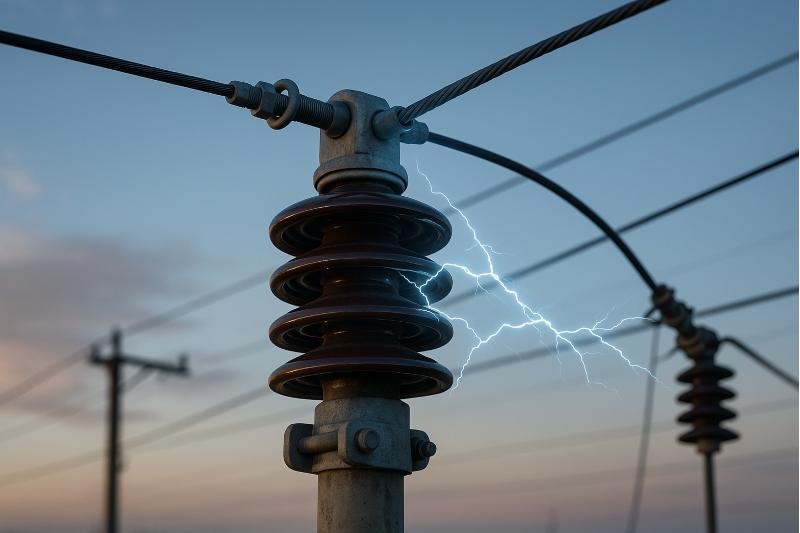
Impact of Variable Electrical Loads on Support Insulators
Introduction to Variable Electrical Loads
Variable electrical loads are a common phenomenon in electrical systems, especially those experiencing fluctuations in energy demand. These variations can be caused by changes in consumption, weather conditions, or system failures. Support insulators, which are critical components in electrical infrastructure, must be able to withstand these variations to ensure safe and efficient operation.
The performance of support insulators can be affected by the magnitude and frequency of variable electrical loads. It is crucial to understand how these loads impact the materials and design of insulators to improve their durability and effectiveness.
In this context, it is important to consider the different types of support insulators, such as polymeric insulators and ceramic ones, and how each responds to variable electrical loads. The choice of the appropriate material can significantly influence the insulator’s ability to handle these loads.
Furthermore, variable electrical loads can induce phenomena such as electrical corona and electric arcs, which can deteriorate insulators over time. Therefore, implementing mitigation strategies to protect insulators from these adverse effects is essential.
- Understand the causes of variable electrical loads.
- Evaluate the impact on different types of insulators.
- Implement effective mitigation strategies.
Insulator Materials and Their Response to Variable Loads
Comparison of Common Materials
Insulator materials play a crucial role in their ability to handle variable electrical loads. Polymeric insulators, for example, are known for their lightweight and resistance to contamination, making them suitable for environments with fluctuating loads. However, they may be more susceptible to damage by electric arcs.
On the other hand, ceramic and porcelain insulators offer excellent durability and resistance to high temperatures, making them ideal for applications where variable electrical loads are frequent and severe. However, their weight and fragility can be disadvantages in certain applications.
The choice of material should be based on a detailed analysis of operational conditions, including the frequency and magnitude of variable electrical loads. A data-driven approach can help optimize material selection to maximize insulator performance and lifespan.
Moreover, advances in coating technology have improved insulator properties, such as moisture and contamination resistance, which can be beneficial in environments with variable loads.
- Advantages and disadvantages of polymeric insulators.
- Properties of ceramic and porcelain insulators.
- Impact of coatings on insulator performance.
Electrical Phenomena Associated with Variable Loads
Electrical Corona and Electric Arc
Variable electrical loads can induce electrical phenomena such as corona and electric arcs, which are critical to the performance of support insulators. Electrical corona occurs when the air around a conductor ionizes, potentially leading to energy losses and damage to insulators.
The electric arc is another phenomenon that can occur due to variable loads. This phenomenon can cause significant damage to insulators, especially if they are not designed to handle such conditions. The presence of electric arcs can result in the degradation of insulator material and, in extreme cases, in catastrophic failures.
To mitigate these effects, it is essential to implement design strategies that include the use of arc-resistant materials and optimization of insulator geometry to minimize arc formation.
Additionally, continuous monitoring of electrical conditions can help identify and address issues before they become significant failures, thus enhancing the reliability of the electrical system.
- Impact of electrical corona on insulators.
- Consequences of electric arcs on system performance.
- Mitigation strategies for electrical phenomena.
Design and Optimization of Insulators for Variable Loads
Design Considerations
The design of insulators is fundamental to their ability to handle variable electrical loads. An optimized design can significantly enhance the insulator’s resistance to phenomena such as corona and electric arcs, as well as mechanical and thermal stresses.
The geometry of the insulator must be carefully considered to minimize the accumulation of contaminants and arc formation. Designs that facilitate self-cleaning and charge dispersion can be particularly effective in environments with variable loads.
Moreover, the integration of advanced technologies such as sensors and monitoring systems can provide real-time data on insulator performance, allowing for proactive adjustments and predictive maintenance.
The use of computational models to simulate insulator behavior under different load conditions can help identify areas for improvement and optimize design for greater efficiency and durability.
- Importance of geometry in insulator design.
- Integration of advanced technologies in design.
- Use of simulations for design optimization.
Maintenance Strategies for Insulators Under Variable Loads
Predictive and Preventive Maintenance
Appropriate maintenance is essential to ensure optimal performance of support insulators under variable electrical loads. Predictive and preventive maintenance strategies can help identify potential problems before they become critical failures.
Predictive maintenance uses real-time data and advanced analytics to predict when an insulator may fail, allowing interventions before issues occur. This not only improves system reliability but also reduces costs associated with unplanned downtime.
Preventive maintenance, on the other hand, involves regular inspections and repairs based on a fixed schedule. While less sophisticated than predictive maintenance, it remains an effective strategy to ensure insulators function correctly under variable loads.
Implementing a comprehensive maintenance program that combines both approaches can maximize the lifespan of insulators and enhance the operational efficiency of the electrical system.
- Benefits of predictive maintenance.
- Importance of regular preventive maintenance.
- Integration of maintenance approaches for optimization.
Case Studies and Practical Examples
Lessons Learned from Real Implementations
Case studies provide valuable insights into how variable electrical loads affect support insulators in real-world situations. Analyzing these cases can offer important lessons for improving the design and maintenance of insulators.
A notable example is the use of polymeric insulators in regions with high industrial pollution. These insulators have proven to be effective in reducing failures related to variable loads, thanks to their self-cleaning properties and resistance to contamination.
Another relevant case study is the implementation of real-time monitoring systems in urban electrical grids. These systems have enabled operators to quickly identify problems related to variable loads and take corrective actions before significant failures occur.
Finally, analyzing historical failures in ceramic insulators has led to the development of new designs that improve arc resistance and overall durability, demonstrating the importance of learning from past experiences.
- Successes with polymeric insulators in polluted environments.
- Advantages of real-time monitoring systems.
- Innovations derived from historical failures in insulators.
Variable electrical loads present significant challenges for the performance of support insulators but also offer opportunities for innovation in design and maintenance. The choice of the appropriate material, optimized design, and implementation of predictive and preventive maintenance strategies are crucial to ensure the reliability and efficiency of the electrical system. Case studies and practical examples underscore the importance of learning from past experiences and applying advanced technologies to continuously enhance the performance of insulators under variable conditions.