
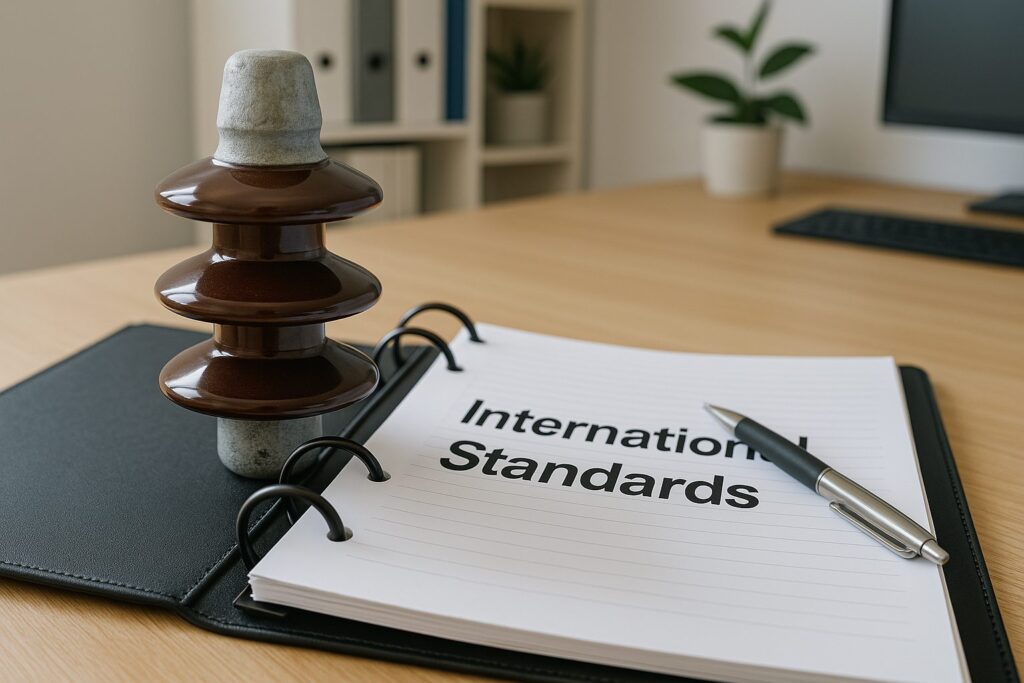
Introduction to international markets for electrical insulators
In international markets, demand for insulators is driven by the expansion and renewal of electrical infrastructure, the energy transition, transport electrification, and the need to increase network resilience against increasingly extreme weather events. This opens up a field of opportunities for specialized manufacturers that provide advanced technical solutions and a strong ability to adapt to each country’s or region’s regulatory requirements.
Global demand outlook for electrical insulators
Global demand for electrical insulators is mainly structured around a few clear drivers: the construction of new infrastructure, the upgrading of existing networks, and the integration of new generation sources (especially renewables) into electrical systems. In this context, the market is segmented by:
- Voltage level: low, medium, high, and extra-high voltage, with very different design and testing requirements.
- Application: overhead lines, substations, railway catenary systems, transformers, switchgear, and bushings.
- Technology and material: electroceramic, polymeric, and hybrid insulators.
- Environmental conditions: industrial pollution, salinity, altitude, vandalism, mechanical and thermal stresses.
This set of variables means that international insulator markets are driven not only by price, but by performance, regulatory compliance (IEC, EN, and local standards), service history, and the manufacturer’s ability to adapt to specific projects.
| Segment | Main need | Impact on insulator selection |
|---|---|---|
| T&D lines | Mechanical reliability and performance under electrical discharges | Design according to voltage level, wind loads, and pollution severity. |
| Substations | Insulation coordination and operational safety | Selection of post insulators, wall bushings, and bushings according to IEC/local standards. |
| Railways | Service continuity and resistance to vibration and vandalism | Catenary insulators designed for dynamic loads and harsh environments. |
| Transformers and equipment | Dielectric safety and compatibility with equipment design | Special insulators and custom bushings for each equipment manufacturer. |
In international markets, the key is not having “a broad catalogue”, but being able to support the customer in selecting the optimal insulator for each project, environment, and applicable standard.
The role of specialized insulator manufacturers (the POINSA case)
In this context, specialized electrical insulator manufacturers hold a strategic position in the value chain. They do not simply supply a standard product; they contribute technical knowledge, experience with type and routine tests, and a global view of how networks and projects are being shaped across different countries.
Manufacturers such as POINSA, with extensive experience in electroceramic and polymeric insulators, can adapt to the needs of utilities, transmission and distribution operators, engineering firms, and equipment manufacturers in different markets. This translates into:
- Wide range of solutions: insulators for substations, overhead lines, railways, transformers, bushings, and more.
- Regulatory expertise: experience with requirements and certifications demanded by operators in Europe, Latin America, MENA, Africa, and other regions.
- Design flexibility: ability to develop specific geometries and configurations for particular projects.
- Reliability focus: emphasis on long-term performance and reducing incidents and service interruptions.
POINSA’s niche in the international electrical value chain
An international electrical project involves many stakeholders: utilities, grid operators, engineering firms, equipment manufacturers, installers, and, very specifically, suppliers of critical components such as electrical insulators. This is where specialized manufacturers such as POINSA provide differentiating value by connecting a project’s technical requirements with reliable insulation solutions tailored to each environment.
Instead of working with a generic catalogue, the approach is to understand how the network will be operated, where the equipment will be installed, and under which standards the project will be evaluated. From there, the insulator stops being a simple spare part and becomes a key design element for service continuity, safety, and infrastructure lifetime.
Types of electrical insulators relevant to international markets
International markets for electrical insulators are mainly organized around three major product families, each with its own positioning in terms of performance, cost, and applicability:
- Electroceramic insulators: traditional in medium- and high-voltage networks, with very solid performance under mechanical stresses and a long service track record in demanding environments.
- Polymeric insulators: lighter, often with better performance under pollution and vandalism, and increasingly relevant for overhead lines and solutions where weight and safety are critical.
- Hybrid and special solutions: combinations of materials and specific designs that optimize performance for very particular applications (for example, certain bushings, railway applications, or compact configurations in substations).
A manufacturer like POINSA positions itself precisely where these three axes intersect: with the ability to offer electroceramic insulators and polymeric insulators and, at the same time, the flexibility to develop special designs aligned with each international customer’s needs.
| Insulator type | Key advantages | Typical use in international markets |
|---|---|---|
| Electroceramic | Mechanical robustness, service history, high thermal resistance. | High-voltage lines, substations, applications with high mechanical loads. |
| Polymeric | Lower weight, good performance under pollution, easy handling. | Overhead lines, vandalism-prone environments, projects with weight restrictions. |
| Hybrid/special | Tailored design, optimization for specific requirements. | Bushings, transformers, compact and railway solutions. |
For a company operating across multiple countries, working with a manufacturer that can cover these product families provides long-term stability: it reduces the number of critical suppliers and helps standardize insulation performance across projects and geographies.
Key applications: substations, T&D, railways, transformers, and bushings
Within POINSA’s niche, there is a set of key applications that concentrates most of the demand for insulators in international markets:
- Medium- and high-voltage substations: post insulators, wall bushings, bushings, and components that form part of busbar architectures, disconnectors, instrument transformers, and switching equipment.
- Transmission and distribution lines (T&D): insulator strings, supports, and solutions adapted to different voltage levels and line configurations.
- Railway sector: insulators for catenary systems, traction substations, and insulation elements in fixed infrastructure. In this field, it is critical to correctly select railway insulators adapted to each line’s service profile.
- Power and distribution transformers: bushings and special insulators that must be integrated into the transformer manufacturer’s own design.
- Bushings and special solutions: custom parts for compact equipment, switchgear, metal-enclosed assemblies, or high power-density solutions.
In each of these applications, the insulator must fulfill different functions: mechanical support, electrical insulation, creepage distance control, resistance to dynamic stresses, or adaptation to complex geometries. It is precisely in the combination of these variables where an insulator specialist can make the difference versus generalist suppliers.
In an international project, choosing the right insulator is not just about “meeting the voltage”. It must fit into the overall design, the intended network operation, and the site’s environmental conditions.
For companies that tender for or develop projects in several countries, working with a specialized supplier like POINSA helps maintain a common technical language across markets: design criteria, testing protocols, and unified technical documentation, which simplifies engineering work and facilitates approvals with utilities and grid operators.
Technical and regulatory requirements in international projects
Technical and regulatory requirements are one of the factors that most influence market entry and consolidation in international electrical insulator markets. Although the foundation is often IEC and EN standards, each country—or even each operator—may add its own specifications, additional test procedures, or particular acceptance criteria.
To explore this further, you can consult “what certifications insulators need to enter international markets”.
In this context, manufacturers like POINSA do not only “manufacture to a standard”: they also help interpret and translate these requirements into concrete product solutions, documentation, and testing. Commonly considered aspects include:
- Insulation levels and coordination: power-frequency withstand, lightning impulse and switching impulse withstand, creepage distances and specific creepage distances by pollution level.
- Type and routine tests: verification of dielectric, mechanical, and thermal behavior, as well as specific tests for certain applications (railways, coastal environments, etc.).
- Material requirements: porcelains, silicones, and other materials must comply with properties defined in standards and each customer’s internal technical specifications.
- Technical documentation and traceability: datasheets, test reports, certificates, and traceability systems that allow the product to be tracked from manufacturing to field installation.
For many companies—especially when facing their first international project or entering a new geographic market—it is very useful to rely on an insulator manufacturer accustomed to approvals, supplier audits, and technical visits. This prior experience reduces the risk of nonconformities and helps accelerate the product approval phase.
If your company participates in substations, T&D, railways, or generation projects across different countries, collaborating with a specialist like POINSA can significantly simplify the path: from selecting the most suitable insulator type to preparing the tests and documentation needed
to pass each customer’s and market’s technical filters.
Factors driving international markets for electrical insulators
Growth in international markets for electrical insulators is neither uniform nor random. It stems from a combination of structural factors (investment in networks, energy transition, transport electrification) and technical conditions (harsh environments, regulatory requirements, and reliability levels demanded by utilities and grid operators).
For specialized manufacturers such as POINSA, understanding these drivers is not just market analysis—it is a practical tool to align their insulator offering with the real needs of utilities, engineering firms, and equipment manufacturers in each country or region.
Quick summary of key drivers:
- Investment in power transmission and distribution (T&D).
- Energy transition and mass deployment of renewables.
- Transport electrification, with the railway sector playing a leading role.
- Increasingly demanding environmental conditions and the need for resilient networks.
Investment in power transmission and distribution
Most electrical insulators are installed in power transmission and distribution infrastructure. Every new kilometer of overhead line or every substation expansion implies installing a certain number of insulators, adapted to voltage, installation design, and environmental conditions.
Internationally, several clear patterns directly impact insulator demand:
- Reinforcing existing networks in mature countries (Europe, parts of Latin America, some areas of Asia), where the focus is increasing capacity and reliability of operating assets.
- Expanding new networks in developing markets (Sub-Saharan Africa, certain areas of Latin America and Asia), where the goal is increasing energy access and connecting new urban and industrial zones.
- International interconnections between electrical systems, requiring high and extra-high voltage lines and therefore insulators with very high mechanical and dielectric requirements.
| T&D project type | Typical insulator needs | Opportunity for manufacturers like POINSA |
|---|---|---|
| New high-voltage line | Insulator strings, solutions by pollution level, high mechanical stress. | Joint definition of geometries, technology selection (electroceramic/polymeric) adapted to the environment. |
| Substation expansion | Post insulators, bushings, wall bushings, special parts for switchgear. | Flexible supply and adaptation to space constraints or busbar reconfigurations. |
| International interconnections | Extra-high voltage insulators, extreme mechanical requirements, specific tests. | Positioning as a supplier able to meet IEC standards plus each operator’s additional requirements. |
In this context, a specialized insulator manufacturer can participate both in greenfield projects (new infrastructure) and in repowering or renewal operations for existing assets, providing solutions that improve insulation, reliability, and network safety.
Energy transition and growth of renewable energy
The energy transition is one of the main drivers of investment in electrical networks. The mass integration of wind, photovoltaic, and other renewables requires reinforcing and adapting T&D networks, as well as building new evacuation substations and connection lines.
For the insulator market, this translates into:
- A greater number of evacuation substations associated with wind farms and photovoltaic plants.
- Construction of medium- and high-voltage lines to connect these assets to the transmission grid.
- The need for reliable solutions in remote environments, often with demanding climatic conditions (high wind speeds, salinity, dust, intense solar radiation).
In many international markets, renewable project timelines are very tight. Having an insulator supplier with industrial capacity and supply-chain reliability becomes key to meeting milestones and avoiding delays.
Transport electrification and railway development
Transport electrification is not limited to electric vehicles. In many countries, increasing capacity and expanding electrified railway networks is a central pillar of sustainable mobility and logistics plans.
The railway sector requires insulators with specific characteristics:
- Resistance to vibration and dynamic loads caused by frequent train traffic.
- Stable performance in urban environments (pollution) and in logistics corridors with variable conditions.
- Protection against vandalism and improper handling.
In this field, POINSA can contribute accumulated know-how in catenary insulators and traction substations, helping engineering firms and installers select the most suitable configurations for each line section and service condition.
Every kilometer of electrified track is also a set of technical insulation decisions: insulator type, material, geometry, and mechanical strength aligned with the line’s service profile.
Modernization and expansion programs for railway networks in Europe, Asia, and Latin America generate sustained demand for reliable, certified insulators, where specialized manufacturers can build long-term alliances with railway operators and construction companies.
Demanding environmental conditions: pollution, salinity, vandalism, extreme climate
Beyond investment, environmental conditions where networks are installed are increasingly decisive. Projects in coastal areas, industrial zones, deserts, or urban environments with high pollution levels require insulators able to maintain performance throughout their service life.
Among the most relevant environmental factors are:
- Industrial and urban pollution: particle deposits on insulating surfaces that can increase the risk of surface discharges.
- Salinity in coastal areas: salt fog and marine aerosols that reduce insulation margins.
- Extreme weather events: strong winds, ice, heavy rain, high temperatures, and solar radiation.
- Vandalism and intentional acts: especially on overhead lines and in urban or peri-urban environments.
If you are interested in concrete examples of technical solutions, you can read more in “what innovations enable insulators to withstand extreme environmental conditions“.
This is where choosing between electroceramic, polymeric, or hybrid solutions becomes particularly meaningful. A manufacturer like POINSA can help to:
- Analyze site environmental conditions.
- Determine recommended creepage distances and geometries.
- Select the most suitable material depending on the combination of factors (pollution, salinity, vandalism, etc.).
- Define additional tests to verify insulator behavior under real service conditions.
In international markets, this ability to adapt technically is a differentiator: it is not just about meeting a generic standard, but about delivering a solution that performs reliably for years in a specific environment, with its operational and environmental particularities.
Priority international markets by region
Although the electrical insulator market is global, not all regions behave the same way or offer the same types of opportunities. For a specialized manufacturer like POINSA, it makes sense to prioritize areas where investment in networks, substation projects, railway development, and the need for reliable insulation solutions—both electroceramic and polymeric—converge.
Broadly speaking, priority markets can be grouped into five blocks: Europe and the European Union, Latin America, Middle East and North Africa (MENA), Sub-Saharan Africa, and Asia-Pacific. Each presents a different mix of drivers, standards, and supplier relationship models.
Europe and the European Union: network renewal and stringent standards
In Europe, the focus is less on basic electrification and more on the modernization and reinforcement of existing networks. The combination of the energy transition, cross-border interconnections, and decarbonization targets forces reinforcement of transmission and distribution infrastructure, as well as the expansion and adaptation of substations.
- High levels of IEC and EN requirements, with additional specifications from each TSO/DSO.
- Highly structured supplier homologation processes, including audits and specific tests.
- Particular relevance of the railway sector in certain countries, with strong demand for catenary insulators.
For a manufacturer like POINSA, based in Europe, this region is key for consolidating high-level references in substations, T&D, and railways. Experience in testing, certifications, and compliance is a direct argument for working with utilities and major engineering firms on reinforcement and repowering projects.
| Project type in Europe | Insulator need | Opportunity for POINSA |
|---|---|---|
| T&D network reinforcement | Insulator strings and supports adapted to new load levels and pollution severity. | Optimized technical proposals to increase reliability and service life. |
| Renewables substations | Post insulators, bushings, and compact solutions. | Collaboration with engineering firms on custom designs. |
| Railway networks | Catenary insulators and traction substations. | Robust solutions against vibration and vandalism. |
Latin America: expansion of medium- and high-voltage networks
In Latin America, mature grids in certain countries coexist with wide areas still developing. This creates a mix of new lines and substations projects and upgrades to existing infrastructure. The result is a very dynamic market for medium- and high-voltage insulators.
Typical regional features include:
- A large number of network expansion projects to improve access to energy.
- Demanding environmental conditions: humidity, salinity, industrial pollution, and extreme weather events.
- A significant presence of engineering companies and EPCs operating across multiple countries.
In this context, the combination of electroceramic and polymeric insulators is particularly relevant. The first offer mechanical robustness and a long service record; the second provide advantages in weight and pollution performance in certain scenarios. POINSA can position itself as a supplier able to propose the best solution for each country, project, and environmental condition.
Middle East and North Africa (MENA): major energy projects and infrastructure
The MENA region is characterized by strong investment in energy and transport infrastructure. Large generation projects (including renewables), high-voltage transmission networks, and new urban areas demand reliable insulation solutions for substations, overhead lines, and railway systems.
Relevant factors from an insulator perspective include:
- Extreme environmental conditions: high temperatures, solar radiation, sand, and dust.
- The need for high creepage distances and specific geometries by pollution level.
- Large-scale projects managed by international EPCs seeking suppliers with regional experience.
For POINSA, this market offers opportunities in:
- High and extra-high voltage substations associated with large generation plants and load centers.
- Long overhead lines in desert environments, where insulator performance under sand and dust is critical.
- Rail and urban transport projects requiring reliable insulation in extreme climates.
The ability to provide solutions tailored for high temperatures and severe pollution, along with technical support in design and testing, is a solid argument for working with utilities and EPCs in MENA.
Sub-Saharan Africa: electrification and universal access to energy
In Sub-Saharan Africa, a significant share of projects aims to expand energy access. This involves new medium- and high-voltage lines, link substations, and generation projects (including renewables) that require a growing volume of electrical insulators.
Main challenges include:
- Networks deployed across very diverse environments: coastal zones, dry interiors, jungles, expanding urban areas.
- The need for robust, long-lasting solutions with relatively simple maintenance.
- Projects financed by international organizations and development banks, with clear quality requirements.
In this scenario, POINSA can position itself as a technical partner for:
- New line and substation projects where proven, long-life solutions are sought.
- Engineering firms and EPCs needing a supplier able to adapt to multiple environmental conditions within the same country or region.
- Customers who value support in selecting the right insulator type based on location and voltage level.
The approach is not only to supply products, but to help define design criteria, materials, and creepage distances that ensure stable performance in networks that, in many cases, must operate with limited maintenance resources.
Asia-Pacific: industrial growth and accelerated urbanization
The Asia-Pacific region comprises very diverse markets, but shares two features that directly impact insulator demand: industrial growth and accelerated urbanization. Both drive projects to expand electrical networks, build substations, and develop urban and interurban railway systems.
Common project characteristics include:
- High load density in certain urban areas, with substations and lines under strong reliability requirements.
- Environments with high humidity, rainfall, pollution, and temperature, depending on the country and zone.
- A presence of equipment manufacturers that export to other markets and require bushings and special insulators.
For a manufacturer like POINSA, opportunities focus on:
- Supplying insulators for distribution and transmission substations in high-demand areas.
- Railway and mass-transit projects requiring reliable insulation in catenary systems and traction substations.
- Collaboration with transformer and switchgear manufacturers needing bushings and special insulators for equipment exported to different countries.
The key is to offer a solid technical catalogue of electroceramic and polymeric insulators, together with the flexibility to design specific solutions for equipment manufacturers and large projects, while always maintaining a high level of quality, testing, and traceability.
In both Latin America and Asia-Pacific, certain patterns repeat in the selection of insulation technologies. You can expand on this in “which types of insulators are most demanded in Latin America and Asia“, which provides a synthesis of those demand profiles by region.
International markets by application sector
In addition to the geographic view, international markets for electrical insulators can be analyzed by application sector. This perspective is especially useful for companies operating across multiple countries because it helps identify common patterns among utilities, railway operators, equipment manufacturers, and engineering firms, regardless of the specific market.
For a specialized manufacturer like POINSA, the main sectors where electroceramic, polymeric, and hybrid insulators play a critical role are:
- Electric utilities and T&D network operators.
- Railway sector and catenary systems.
- Transformer and switching equipment manufacturers.
- EPCs and engineering firms in “turnkey” projects.
- Renewable energy and storage projects.
Electric utilities and T&D network operators
Electric utilities and transmission and distribution operators are, internationally, among the largest buyers of insulators. Their priority is ensuring service continuity and network safety, minimizing incidents and unplanned outages.
In this segment, insulators are mainly integrated into:
- Medium-, high-, and extra-high voltage overhead lines, with insulator strings and supports adapted to voltage level and environment.
- Transmission and distribution substations, where post insulators, bushings, wall bushings, and special solutions are used.
Utilities typically work with:
- Their own technical specifications, based on IEC/EN standards but with additional requirements.
- Approved vendor lists, requiring a track record of tests, audits, and references.
- Asset renewal plans, which create opportunities both in new projects and replacements.
For POINSA, this sector demands a combination of technical strength, supply reliability, and documentary support, particularly relevant in international tenders and framework agreements.
Railway sector and catenary systems
The railway sector is a very specific market within electrical insulation. Insulators must withstand dynamic loads, vibration, temperature changes, and, in many cases, vandalism, all while maintaining stable dielectric behavior.
Insulators in this sector are mainly used in:
- Catenary systems: supporting traction conductors on high-speed lines, commuter rail, metro, and tram systems.
- Traction substations: post insulators, bushings, and components associated with switching equipment.
| Railway requirement | Impact on insulator design |
|---|---|
| Vibration and dynamic loads | Material and geometry selection with high mechanical strength and fatigue resistance. |
| Urban/industrial environment | Appropriate creepage distances, good performance under pollution and humidity. |
| Vandalism | Designs that reduce breakage risk and facilitate maintenance. |
POINSA’s experience in catenary insulators and railway applications is a key factor for working with operators and construction companies on international projects where traction system reliability is critical.
Transformer and switching equipment manufacturers
Power and distribution transformer manufacturers, as well as producers of switchgear and switching equipment, are another key segment. Here, the insulator is part of the equipment’s internal design and must integrate perfectly with its electrical, mechanical, and dimensional requirements. In particular, bushings and wall bushings for transformers are a critical element that shapes the equipment’s overall behavior
Key highlights include:
- Bushings and wall bushings designed for specific voltage levels and configurations.
- Special insulators for metal enclosures, MV cells, or compact equipment.
These customers look for:
- Custom design capability, with fine adaptation to equipment needs.
- Repeatability and dimensional control, essential in series production.
- Documentation and testing supporting the entire equipment for their own international customers.
In transformers and switching equipment, the insulator is not an interchangeable component: it is part of the equipment’s core design and determines its overall behavior.
The combination of technical experience and industrial flexibility allows POINSA to become a preferred partner for manufacturers exporting equipment to different markets and needing an insulator supplier capable of supporting that growth.
EPCs and engineering firms in “turnkey” projects
Engineering, procurement and construction companies (EPCs) act as integrators for large projects involving substations, lines, generation plants, and railway systems. Their goal is to deliver complete installations on time and with the quality levels required by the end customer (usually utilities, operators, or public administrations).
In this context, EPCs need:
- Reliable suppliers of critical components, such as insulators.
- Technical support during design and solution selection adapted to the environment.
- Responsiveness to scope changes, design adjustments, or spare parts needs.
A manufacturer like POINSA adds value by offering:
- A broad technical catalogue of insulators for substations, lines, and railways.
- Active participation in reviewing specifications and drawings.
- Commitment to schedules and documentary traceability aligned with contractual project requirements.
Renewable energy and storage projects
Renewable energy projects (wind, PV, hybrid) and energy storage have moved from niche to central in network and generation planning worldwide. Each wind farm, PV plant, or storage installation requires substations, evacuation lines, and therefore a significant number of insulators.
These projects are characterized by:
- Locations in remote environments, with more complex maintenance access.
- Demanding environmental conditions (wind, dust, radiation, salinity, depending on location).
- Tight execution timelines, especially when regulatory or grid-connection milestones apply.
By working with developers, EPCs, and utilities on these projects, POINSA can position itself as a specialized partner in insulation solutions for installations expected to operate for decades, often far from urban centers, where insulator reliability and robustness are essential for project viability. In wind farms and PV plants, it is especially useful to know “what maintenance insulators require in renewable energy installations“.
Overall, the sector-based analysis shows that international markets for electrical insulators are not homogeneous, but they do share a common denominator: the need for a manufacturer able to understand each sector’s context and translate it into specific, reliable, and well-documented insulation solutions. That is precisely the value proposition POINSA can offer customers worldwide.
Criteria for selecting target markets for electrical insulators
In a global context with multiple opportunities, not all countries or projects are equally attractive for an electrical insulator manufacturer. Selecting the right target markets is key to optimizing commercial, technical, and industrial resources, and to building solid, sustainable relationships with international customers.
For a specialized company like POINSA, market choice should not rely only on potential volume, but on a combination of factors: size and stability of network investment, regulatory barriers, competition, project types, and access channels (utilities, EPCs, OEMs, etc.).
Key market selection criteria:
- Market size and dynamics in T&D, substations, railways, and renewables.
- Level and complexity of entry barriers.
- Degree of local and international competition.
- Clarity and accessibility of entry channels (tenders, agreements, OEMs).
Market size, project pipeline, and expected investment
The first logical criterion is market size, understood not only as a theoretical total value, but as the real volume of projects where insulators play a relevant role: new or expanded substations, medium- and high-voltage lines, electrified railway networks, renewable plants, etc.
When assessing a market size for insulators, it helps to consider:
- Annual or multiannual investment in transmission and distribution (utilities’ and regulators’ plans).
- Network expansion or renewal programs (master plans, energy roadmaps, etc.).
- Identified projects in substations, lines, railways, and renewables that require insulators.
| Indicator | What it provides | Relevance for POINSA |
|---|---|---|
| T&D investment plan | Measures the country’s effort in electrical networks. | Helps prioritize markets with sustained growth in insulator demand. |
| Railway projects underway | Indicates potential demand for catenary and traction insulators. | Guidance to segment the railway offering and local partnerships. |
| Planned renewable capacity | Reflects future need for substations and evacuation lines. | Helps anticipate insulator demand in wind and solar plants. |
A market with a clear and stable project pipeline is usually more attractive than one with big plans on paper but limited execution. For POINSA, this means focusing commercial and technical efforts where the probability of converting projects into orders is higher.
Entry barriers: certifications, standards, and homologation processes
The second major criterion is entry barriers, which can take the form of regulatory requirements, complex homologation processes, specific certifications, or particular procurement models for each utility or operator.
Common barriers for insulator suppliers include:
- Supplier approval by utilities and grid operators, which may involve factory audits, documentation reviews, and additional testing.
- Specific national standards that supplement or qualify standard IEC/EN norms.
- Certificates and type tests that must be performed in specific laboratories or under third-party supervision.
An attractive market is not necessarily the one with the lowest entry barrier, but the one where investment in approvals and certifications is offset by sufficient volume and long-term relationships.
For POINSA, with experience in certification and testing of electroceramic and polymeric insulators, markets with more demanding technical barriers can become an opportunity to stand out versus competitors with less technical or documentary capability.
Level of local and international competition
Analyzing the level of competition is the third axis in selecting target markets. In some countries there is a strong presence of local insulator manufacturers; in others, supply is driven mainly by imports from different origins.
When assessing competition, it helps to consider:
- Approximate share of local manufacturers versus international suppliers.
- Typical positioning (price-driven, quality-driven, niche-focused, etc.).
- The degree of historical relationships between certain suppliers and utilities, operators, or equipment manufacturers.
This analysis allows POINSA to identify:
- Markets where there is room for a supplier combining technical specialization and reliability.
- Countries or segments where it makes sense to enter with a niche strategy (e.g., railways, special bushings, demanding projects).
- Areas where purely price-based competition makes intensive market entry less attractive.
Entry channels: distributors, OEMs, tenders, and framework agreements
The fourth key criterion is the entry channels available in each market. For electrical insulators, direct contacts with utilities and operators matter, but market access is often built through:
- Technical distributors specialized in medium- and high-voltage electrical materials.
- Equipment manufacturers (OEMs) integrating insulators into transformers, MV cells, switchgear, or railway systems.
- EPCs and engineering firms leading turnkey projects for end customers.
- Public tenders and framework supply agreements with utilities and operators.
For POINSA, assessing each channel’s viability means answering questions such as:
- Are there distributors or local partners with a technical profile aligned with POINSA’s insulator range?
- Are there equipment manufacturers needing bushings and special insulators who export to other markets?
- Are tenders and framework contracts open to new approvable suppliers, or very restricted?
A market where channels are clear and accessible—even if it requires homologation effort—may be more attractive than one with opaque rules or highly concentrated among a few established suppliers.
Integrating criteria: market prioritization for POINSA
In practice, selecting international markets for electrical insulators means balancing these criteria: size, pipeline, barriers, competition, and channels. There is no single definitive indicator, but a tradeoff between potential and feasibility.
A simple way to manage this prioritization is to build an internal matrix scoring, for each country or region:
- Market attractiveness (volume, growth, projects).
- Access difficulty (technical barriers, approvals, administrative requirements).
- Fit with POINSA’s profile (previous experience, references, service capability).
From there, three groups can be defined:
- Priority markets: high potential and strong fit with POINSA’s profile, where it makes sense to invest in long-term relationships.
- Developing markets: reasonable potential but with certain barriers or uncertainties, where the strategy should be gradual.
- Opportunity markets: countries where POINSA can serve specific projects through partners or global customers, without an intensive presence.
This approach supports data-driven decisions aligned with POINSA’s technical and industrial capabilities, avoiding dispersion and focusing on those international markets for electrical insulators where the company’s value proposition can deliver the greatest impact.
International positioning strategies for a manufacturer like POINSA
Once priority international markets have been identified, the next step is defining how to position in them. For an electrical insulator manufacturer like POINSA, this is not only about “reaching” new countries, but about building a solid image as a reliable technical partner for utilities, EPCs, equipment manufacturers, and railway operators.
In this context, the most effective strategies combine three main axes:
- Product adaptation to each market’s technical and environmental needs.
- Technical service and engineering support as a differentiator.
- Differentiation through quality, reliability, and references throughout the insulator life cycle.
Product adaptation: materials, design, custom solutions, and hybrids
International markets for electrical insulators are highly heterogeneous in terms of standards, environmental conditions, and operational philosophy. Therefore, a key strategy for POINSA is product adaptation, in materials as well as in design and configuration. You will find out more this in our section specialized in custom products.
This adaptation can materialize at several levels:
- Technology selection: electroceramic, polymeric, or hybrid solutions depending on environment (pollution, salinity, vandalism, temperature, etc.).
- Geometry and creepage distances: adjustment to pollution levels defined by IEC/EN standards and each operator’s specific requirements.
- Special designs for bushings, compact equipment, railway applications, or projects with dimensional constraints.
| Adaptation axis | Practical example | Value for the customer |
|---|---|---|
| Material | Using polymeric insulators on lines exposed to vandalism or severe pollution. | Higher in-service reliability and fewer incidents. |
| Geometry | Increasing creepage distances for coastal or industrial areas. | Better performance against surface discharges and pollution. |
| Custom design | Special bushings integrated into transformers or compact switchgear. | Design optimization and easier integration. |
This approach allows POINSA to position itself as a manufacturer able to respond to specific specifications, rather than offering only standard solutions. For utilities, EPCs, and equipment manufacturers, this flexibility is decisive when selecting suppliers for complex international projects.
Technical service, engineering support, and customer proximity
In the world of electrical insulators, technical service is as important as the product itself. International customers particularly value having an interlocutor who:
- Understands the language of standards, testing, and specifications.
- Participates in requirements definition and technical offer reviews.
- Supports the customer in the design, installation, and commissioning phases of the project.
Added value is not only supplying a standard-compliant insulator, but helping the customer choose the right insulator for their environment, network design, and maintenance strategy.
POINSA can strengthen its international positioning through:
- Engineering support in selecting types, materials, and geometries for each project and site.
- Assistance in preparing technical documentation for tenders and approval processes.
- Close support through in-house teams or local partners with a technical profile aligned with the product.
Differentiation through quality, reliability, and insulator life cycle
In many international markets, insulator purchasing decisions are not based only on price, but on the perceived and proven quality of the product and manufacturer. This is where POINSA can differentiate itself from purely cost-driven suppliers.
Key elements include:
- Track record of type and routine tests in recognized laboratories.
- Controlled manufacturing processes, with traceability from raw materials to final product.
- Life-cycle emphasis: long-term behavior, fewer incidents, and lower total cost of ownership for the customer.
| Differentiation factor | Impact on the customer |
|---|---|
| Testing and certifications | Higher confidence in insulator performance and easier homologation. |
| Quality control and traceability | Better root-cause analysis in case of incidents and continuous improvement. |
| Life-cycle approach | Lower costs from maintenance, replacements, and service interruptions. |
This type of positioning fits especially well in projects where the cost of an incident is far higher than any initial component savings, as in substations, high-voltage lines, railway networks, and large generation or renewable plants.
In this context, it is also useful to understand “what maintenance insulators require to ensure their reliability“.
Building trust: references, success stories, and regulatory compliance
In international markets, trust is built on facts: references, delivered projects, certifications, passed audits, and strict compliance with applicable standards. For POINSA, turning accumulated experience into commercial and technical arguments is essential.
Levers to strengthen trust include:
- References by project type: substations, T&D, railways, renewables, transformers, etc.
- Success stories showing how specific insulator choices improved reliability or facilitated approval.
- Documentary transparency in tests, certifications, and internal quality procedures.
In complex markets, references act as a “technical endorsement” that reduces perceived risk and makes it easier for the customer to choose a new insulator supplier.
By combining product adaptation, close technical service, high quality and references, POINSA can consolidate a clear positioning: that of an electrical insulator manufacturer able to support customers in demanding, multi-country, long-term projects, delivering insulation solutions aligned with each market’s real needs. A good starting point is reviewing “what advantages Poinsa clients have reported after implementing its insulators“.
Future trends in international markets for electrical insulators
International markets for electrical insulators are evolving in parallel with the transformation of energy and mobility systems. These dynamics are directly linked to “which trends are transforming the global energy industry“, and will shape demand for insulators in the coming years. Beyond volume growth, clear trends are emerging in insulation technologies, sustainability, and network resilience. Understanding these dynamics helps specialized manufacturers like POINSA anticipate needs and adapt their offering.
Growth of polymeric and hybrid insulators
One of the most notable trends is the increased use of polymeric insulators and hybrid solutions in certain applications, especially in overhead lines and environments with demanding conditions or exposure to vandalism.
Polymeric insulators offer several advantages:
- Lower weight, facilitating assembly and reducing loads on structures and supports.
- Good pollution performance, thanks to the hydrophobicity of silicones and polymer compounds.
- Greater impact resistance and, in some cases, better vandalism resistance than traditional solutions.
Hybrid solutions combine materials and designs to optimize behavior in very specific applications (for example, transformer bushings, compact equipment, or certain substation and railway elements).
Sustainability, carbon footprint, and circular economy in the electrical supply chain
Sustainability is gaining weight in purchasing decisions made by utilities, grid operators, EPCs, and equipment manufacturers. This includes not only the energy source, but also the carbon footprint associated with components that make up networks and substations, including insulators.
Aspects increasingly considered include:
- Energy consumption and manufacturing processes for both electroceramic and polymeric insulators.
- Expected service life and long-term performance, reducing replacement needs and waste.
- Recycling or valorization potential of materials at end of life.
For POINSA, this trend implies:
- Working on efficient manufacturing processes and documenting sustainability progress.
- Communicating the positive impact of higher durability and reliability in terms of lower waste and total cost of ownership.
- Exploring, as far as possible, improved life cycles and practices aligned with circular economy principles in electrical insulation.
Greater resilience to climate change and extreme events
Climate change is increasing the frequency and intensity of extreme weather events (strong winds, heavy rainfall, ice, heatwaves, sandstorms, etc.). Electrical networks and railway infrastructure must adapt to maintain resilience in this new context, and insulators play a key role in that adaptation.
In this scenario, international customers seek:
- Insulators capable of withstanding high and combined mechanical loads (wind, ice, vibration). These scenarios require customized insulation design; you can explore this further in “how extreme weather conditions affect the customization of insulators“.
- Geometries and materials that maintain dielectric performance in environments with changing pollution and extreme conditions.
- Solutions validated through specific tests simulating more demanding service scenarios than usual.
For a manufacturer like POINSA, the trend toward more resilient networks means:
- Developing and testing insulator designs with greater safety margins against mechanical loads and critical environmental conditions.
- Collaborating with utilities, EPCs, and equipment manufacturers to define more conservative design criteria aligned with future climate scenarios.
- Making resilience a central technical argument in its value proposition for international markets.
Overall, these trends point to a market where the combination of technological innovation, sustainability, and robustness will be increasingly valued. Insulator manufacturers that anticipate these requirements and translate them into concrete solutions will be in an advantageous position in the coming years.
How POINSA can support its customers in international markets
In light of the above, the key question for companies involved in substations, T&D, railways, renewables, or equipment manufacturing projects is clear: what can a specialized manufacturer like POINSA contribute in international markets for electrical insulators?
The answer combines technical capability, international experience, and industrial reliability. It is not just about supplying a component, but supporting the customer throughout the project life cycle, from design to in-service operation.
Collaboration in the design and selection of insulators for each market
The first level of support is design collaboration. POINSA can work alongside utilities, engineering firms, equipment manufacturers, and EPCs to:
- Analyze the installation environment (climate, pollution, salinity, vandalism, etc.).
- Define the most suitable creepage distances, geometries, and materials for each voltage level.
- Select the insulator family (electroceramic, polymeric, or hybrid) that best meets the project requirements.
This approach avoids unnecessary oversizing, reduces in-service failure risks, and aligns insulation design with expected service life and maintenance strategies.
Support with certifications, testing, and local standards
The second level of support relates to regulatory compliance. Each international project may include specific testing, certifications, or approval processes. As a specialized manufacturer, POINSA can:
- Help interpret IEC/EN standards and their local adaptations.
- Prepare and document type and routine tests, as well as additional tests when required by the customer.
- Collaborate in product and supplier approval processes with utilities and grid operators.
Production capacity, lead times, and supply reliability
In international projects, schedule compliance matters as much as technical quality. Delays in delivering critical components can affect the whole project, with economic and reputational impact for utilities, EPCs, and equipment manufacturers.
In international projects, understanding “what delivery timelines apply in the export of electrical insulators” is as relevant as the technical specifications.
Here, POINSA can contribute:
- Industrial capacity to serve projects of different sizes, from specific series to significant volumes.
- Planning and lead-time commitment aligned with project milestones.
- Supply-chain traceability, enabling tracking of each insulator batch from factory to site.
Today, utilities and EPCs also highly value understanding “which technologies can be used to track exported insulator shipments” and ensuring traceability throughout the logistics chain. This combination of capacity and reliability is especially valued in renewables, substations, lines, and railway projects, where commissioning milestones are demanding and often inflexible.
Conclusions and call to action
International markets for electrical insulators are undergoing a period of deep transformation, driven by the energy transition, expansion and modernization of networks, railway development, and the need for more resilient networks under extreme environmental conditions.
In this context, insulators move from a secondary element to a strategic component of substations, lines, railway systems, transformers, and switching equipment. Choosing the right manufacturer directly impacts network reliability, total cost of ownership, and the ability to meet each country’s regulatory requirements.
A specialized manufacturer like POINSA can support customers throughout this journey by providing:
- Insulation solutions in electroceramic, polymeric, and hybrid technologies adapted to each environment and sector.
- Technical and engineering support for defining, selecting, and validating insulators.
- Industrial reliability, with production capacity, quality control, and lead-time compliance.
For companies developing projects in substations, T&D, railways, renewables, or equipment manufacturing, working with a partner like POINSA means having an expert ally in electrical insulation, able to add value both during design and in long-term operation.