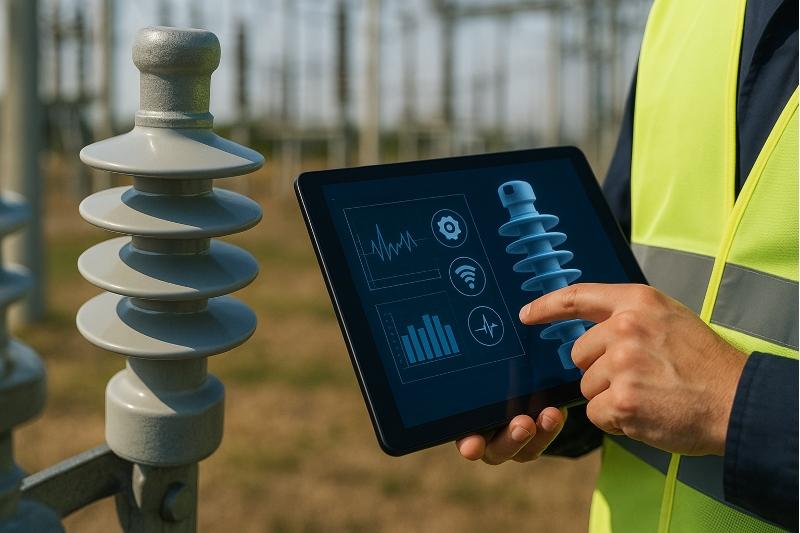
Sensor Technologies for Insulator Monitoring
Real-time monitoring of electrical insulators is crucial to ensure the safety and efficiency of electrical systems. One of the most commonly used technologies for this purpose is smart sensors. These devices can detect changes in the environmental and structural conditions of insulators.
Smart sensors can measure a variety of parameters, such as temperature, humidity, and contamination levels. This data is essential to predict the behavior of insulators under different operational conditions.
An example of sensor application is the use of fiber optic sensors, which are highly sensitive and can be easily integrated into insulators. These sensors provide precise data on the physical condition of the insulator.
Additionally, smart sensors can be connected to communication networks to transmit data in real-time to a centralized system. This enables operators to make informed decisions about the maintenance and replacement of insulators.
- Temperature measurement
- Humidity detection
- Contamination monitoring
- Integration with communication networks
Use of Drones for Insulator Inspection
Drones have become a valuable tool for inspecting insulators in hard-to-reach locations. Equipped with high-resolution cameras and thermal sensors, drones can perform detailed visual inspections without needing to interrupt electrical service.
One of the advantages of using drones is their ability to access dangerous or hard-to-reach areas, such as elevated transmission lines. This reduces risk to workers and allows for faster and more efficient inspections.
Drones can also be equipped with infrared sensors to detect hotspots on insulators, indicating possible failures or deterioration. This information is crucial for preventive maintenance.
Moreover, drones can be programmed to perform periodic inspections, ensuring constant monitoring and reducing the likelihood of unexpected failures in the electrical system.
- Detailed visual inspection
- Access to dangerous areas
- Hotspot detection
- Scheduled periodic inspections
Implementation of Computer Vision Systems
Computer vision is another emerging technology used for insulator monitoring. These systems use cameras and advanced algorithms to analyze images of insulators and detect anomalies.
Computer vision systems can identify cracks, wear, and contaminant buildup on insulators. This information is vital for planning maintenance and preventing system failures.
A relevant case study is the use of computer vision in electrical distribution networks in urban areas, where contaminant buildup is a common issue. These systems have proven effective in early problem detection.
Additionally, computer vision can integrate with other technologies, such as drones, to provide a more comprehensive and detailed analysis of the condition of insulators.
- Crack detection
- Wear identification
- Analysis of contaminant buildup
- Integration with drones
Application of IoT in Insulator Monitoring
The Internet of Things (IoT) has revolutionized how electrical insulators are monitored. By connecting insulators to an IoT network, it is possible to collect and analyze data in real-time from multiple locations.
IoT devices can be equipped with vibration, temperature, and humidity sensors, providing a comprehensive view of the condition of insulators. This data is sent to a centralized platform for analysis.
A key benefit of IoT is its ability to automate the monitoring process, reducing the need for manual inspections and enabling faster response to detected issues.
Furthermore, IoT facilitates the integration of data from different sources, allowing operators to have a more complete and accurate view of the condition of insulators across the entire electrical network.
- Vibration sensors
- Temperature and humidity monitoring
- Monitoring automation
- Integration of data from multiple sources
Use of Predictive Analysis for Insulator Maintenance
Predictive analysis is a powerful tool for insulator maintenance. Using historical and real-time data, predictive algorithms can anticipate failures before they occur.
This approach allows electrical companies to optimize their maintenance schedules, reducing costs and improving system reliability. Predictive analysis relies on mathematical models that identify patterns and trends in the data.
An example of application is the use of predictive analysis in high-voltage transmission networks, where failures can have significant consequences. These systems have proven effective in reducing service interruptions.
Additionally, predictive analysis can be integrated with other technologies, such as IoT and computer vision, to provide a more holistic and accurate approach to insulator maintenance.
- Optimization of maintenance programs
- Cost reduction
- Improvement of system reliability
- Integration with IoT and computer vision
Development of Advanced Materials for Insulators
The development of advanced materials is a key trend in improving the monitoring and performance of insulators. These materials are designed to offer greater resistance to adverse environmental conditions.
Hybrid insulators and silicone-coated insulators are examples of advanced materials that offer superior properties, such as greater hydrophobicity and contamination resistance.
These materials not only improve the performance of insulators but also facilitate their monitoring. For example, silicone coatings can include integrated sensors that provide real-time data on the condition of the insulator.
Moreover, using advanced materials can extend the lifespan of insulators, reducing the need for frequent replacements and improving the sustainability of electrical systems.
- Greater resistance to adverse conditions
- Superior hydrophobic properties
- Integrated sensors in coatings
- Extension of insulator lifespan
Real-time monitoring of electrical insulators is critical to ensuring the safety and efficiency of electrical systems. Technologies such as smart sensors, drones, computer vision, IoT, predictive analysis, and advanced materials are transforming how these critical components are managed and maintained. Each of these technologies offers unique advantages, from early fault detection to maintenance optimization and performance improvement. By integrating these technologies, companies can achieve a more comprehensive and effective approach to insulator monitoring, thereby ensuring the reliability and sustainability of their electrical systems.