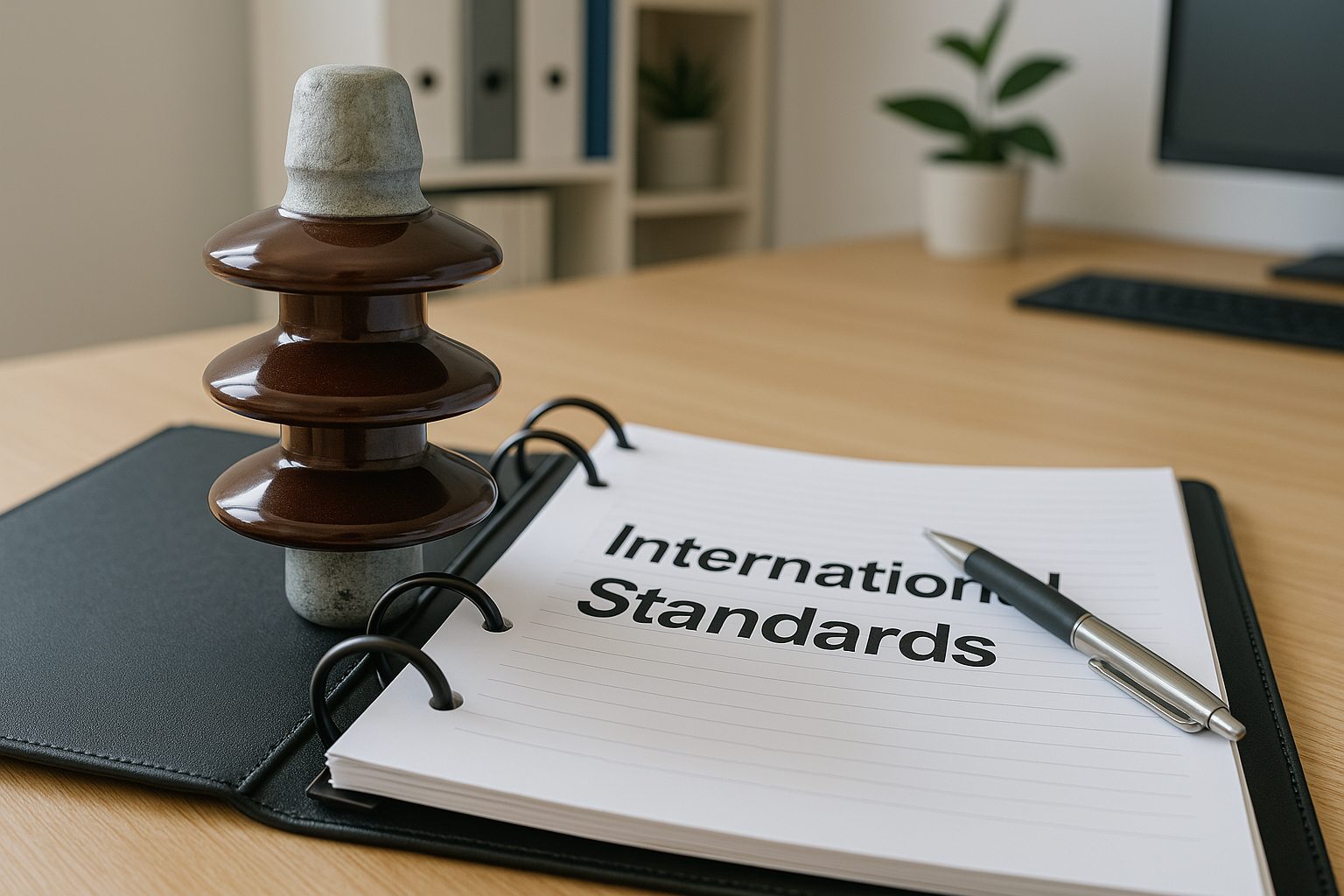
Understanding International Regulations
Adapting insulators to new regulations in international markets is a challenge that requires a deep understanding of current regulations. Regulations can vary significantly between countries, meaning companies must be aware of the technical and legal specifications of each market.
International regulations are often based on standards such as those of the International Electrotechnical Commission (IEC) or the Institute of Electrical and Electronics Engineers (IEEE). These standards establish criteria for the safety, efficiency, and compatibility of electrical products.
For companies like Poinsa, it is crucial to stay updated with the revisions of these standards. This not only ensures legal compliance but also enhances competitiveness in the global market.
Some of the key aspects that regulations may cover include:
- Resistance to extreme weather conditions
- Electromagnetic compatibility
- Safety and fire protection
- Environmental impact and sustainability
An example of the importance of these regulations is the case of polymeric insulators, which must meet strict standards of pollution resistance and vandalism in certain regions.
Evaluation of Market Needs
Before adapting insulators to new regulations, it is essential to conduct a thorough evaluation of market needs. This involves identifying the technical specifications and legal requirements that are priorities in each region.
Companies should consider factors such as the climate, existing infrastructure, and customer expectations. For example, in regions with high humidity, insulators must have advanced hydrophobic properties.
Additionally, it is important to analyze market trends and emerging demands. This may include the growing need for sustainable and environmentally friendly solutions.
Some steps to evaluate market needs include:
- Detailed market research
- Consultations with local experts
- Competitor analysis
- Surveys of potential customers
A relevant case study is that of insulators for railway catenaries, where durability and resistance to vibration are crucial due to operational conditions.
Development of Customized Products
Once market needs are identified, the next step is to develop products that comply with specific regulations. This may involve modifying existing designs or creating new products from scratch.
The development of customized products requires close collaboration between the engineering, research and development, and regulatory compliance teams. Each team contributes its expertise to ensure that the products not only meet regulations but are also competitive in terms of cost and performance.
It is essential to conduct exhaustive testing to ensure that the products meet the required standards. This may include tests for mechanical strength, electrical conductivity, and corrosion resistance.
Key elements in the development of customized products include:
- Innovation in materials
- Optimization of manufacturing processes
- Rigorous quality testing
- Continuous customer feedback
A successful example is the development of hybrid insulators, which combine the advantages of polymeric and ceramic materials to meet demanding standards.
Implementation of Compliance Strategies
The implementation of compliance strategies is a critical step to ensure that products align with international regulations. This involves establishing internal processes that guarantee continuous compliance and the ability to adapt to future regulatory changes.
Companies must develop a robust quality management system that includes regular audits and compliance reviews. This helps identify areas for improvement and ensures that products continue to meet regulations over time.
Furthermore, it is important to train staff on relevant regulations and industry best practices. This ensures that all employees understand the importance of compliance and how to contribute to it.
Some effective strategies include:
- Implementation of quality management systems like ISO 9001:2015
- Continuous staff training
- Monitoring regulatory changes
- Collaboration with certification bodies
A successful example of implementing compliance strategies is Poinsa, which has maintained its international certifications through a proactive and systematic approach.
International Collaboration and Strategic Alliances
International collaboration and strategic alliances are fundamental for adapting to new regulations in international markets. These collaborations can provide access to local knowledge, additional resources, and business opportunities.
Companies can benefit by partnering with local distributors, academic institutions, and industry organizations. These alliances can facilitate access to information about local regulations and help overcome cultural and language barriers.
Furthermore, strategic alliances may allow for the joint development of products that comply with specific regulations, leveraging the strengths of each partner.
Benefits of international collaboration include:
- Access to new markets
- Exchange of technical knowledge
- Reduction in development costs
- Improvement in competitiveness
A successful case is Poinsa’s collaboration with local companies in Asia, which has allowed for the adaptation of its products to the region’s specific regulations.
Continuous Monitoring and Adaptation
Continuous monitoring and adaptation are essential for maintaining compliance with international regulations. Regulations may change over time, and companies must be prepared to adapt quickly to these changes.
Continuous monitoring involves keeping abreast of regulatory updates and regularly evaluating the performance of products in the market. This allows for the identification of areas for improvement and adjustment of compliance strategies as necessary.
Companies must establish a feedback system that includes collecting customer data, analyzing market trends, and evaluating competition. This provides valuable information for informed decision-making.
Effective practices for continuous monitoring and adaptation include:
- Periodic compliance reviews
- Analysis of product performance data
- Customer satisfaction surveys
- Participation in industry forums and conferences
An example of continuous adaptation is the adjustment of Poinsa’s insulators to comply with new environmental regulations in Europe, which has improved their market acceptance.
Adapting insulators to new regulations in international markets is a complex process that requires a comprehensive approach. From understanding regulations to developing customized products and implementing compliance strategies, each step is crucial for success. International collaboration and continuous monitoring are key elements that allow companies like Poinsa to remain competitive and meet global market expectations. By following these practices, companies can not only comply with regulations but also seize new business opportunities in international markets.