
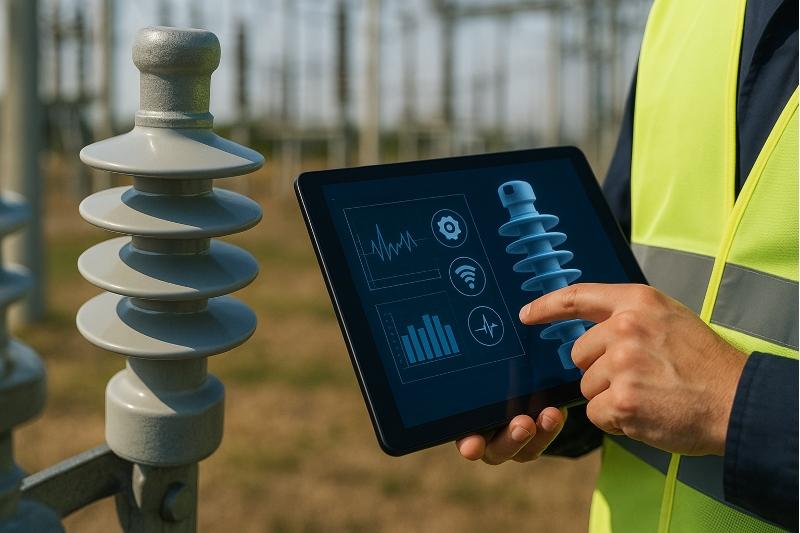
Compared to standard, off-the-shelf catalogue solutions, a custom design makes it possible to tailor the insulator to the reality of the project: from operating voltage and the required creepage distances to geometry, materials, and mechanical interfaces with other equipment. As we explain in our article what are the advantages of working with a manufacturer that invests in R&D&i, for industrial and infrastructure companies this approach not only improves technical performance, but also reduces the risk of downtime and makes maintenance easier.
- Higher reliability: the insulator is designed for real operating conditions.
- Cost optimization: it avoids oversizing or undersizing the solution.
- Integration flexibility: the design adapts to new or existing equipment.
- Regulatory compliance: it takes into account standards and specific requirements for each country or sector.
A custom insulator is not just a part with a different shape or size. It is the result of an engineering process that aligns electrical,
mechanical, and environmental performance with the project’s objectives and the applicable regulations.
What are custom insulators and how do they differ from standard ones?
Definition and function of electrical insulators
An electrical insulator is a component designed to mechanically support conductors or energized equipment and, at the same time, ensure electrical insulation from grounded parts or other voltage levels. Its main mission is to prevent unwanted discharges, electric arcs, and short circuits that could compromise people’s safety, equipment integrity, and supply continuity.
To fulfil this function, parameters such as the following come into play:
- Dielectric strength of the insulating material.
- Geometry and surface creepage distances.
- Allowable mechanical load (compression, bending, tension, torsion).
- Behaviour against contamination, humidity, UV radiation, and other environmental agents.
Traditionally, many of these requirements are covered with standard insulators listed in manufacturers’ catalogues. However, it is increasingly common for projects to require specific geometries, special mechanical interfaces, particular voltage levels, or specific regulatory requirements that cannot be solved with a generic product.
If you need an overview of the different families, review “what types of insulators exist according to their use” where we explain the main categories on which these custom designs are then built.
When a standard insulator is no longer sufficient
A standard insulator can be suitable in repetitive or very common applications, but in many cases companies run into limitations. Some typical examples where a catalogue insulator is no longer sufficient are:
- Limited space or complex geometries: switchboards, cells, and compact substations where standard insulator dimensions prevent optimal integration or safe maintenance. In these cases, the criteria explained in “how to choose an insulator for indoor and outdoor electrical networks” help define a better starting point for custom design.
- New voltage levels or network configurations: grid modernisation, renewable integration, or adaptation to local regulations that demand insulation distances different from those covered by standard offerings.
- Severe environmental conditions: coastal areas, highly polluted environments, extreme climates, or the presence of chemically aggressive atmospheres that require specific materials and designs. When the environment is beyond standard conditions, it is essential to consider how extreme weather conditions affect customisation of insulators to avoid mid-term reliability issues.
- Special mechanical requirements: dynamic loads, vibrations, high bending stresses, or load combinations not covered by standard models. As we explain in the article how vibrations affect the durability of insulators in power networks, ignoring these effects can significantly shorten insulation service life.
- Integration into existing equipment: repowering or retrofit projects where it is necessary to respect already installed mechanical interfaces, embedded parts, studs, flanges, or specific drilling patterns.
In these scenarios, forcing the use of a standard insulator can lead to safety compromises, oversizing, additional mechanical adaptation costs, or longer installation times. Custom insulators make it possible to avoid these concessions.
Advantages of custom insulators for industrial companies
Choosing custom insulators is not limited to “having a special product.” It means integrating the manufacturer into the design process so the insulator becomes an element aligned with the asset’s operation and maintenance strategy. Key advantages for industrial companies and infrastructures include:
| Advantage | Operational impact |
|---|---|
| Exact fit to service conditions | Minimises the risk of discharges, premature ageing, and failures, even under overvoltage or contamination scenarios. |
| Optimisation of available space | Enables more compact installation designs while maintaining the insulation distances required by applicable standards. |
| Reduction of indirect costs | Less need for additional structures, adapters, or last-minute on-site modifications. |
| Better maintainability | The design can improve access, inspection, and replacement, reducing downtime. |
| Qualification and traceability | The manufacturer can document tests, materials, and processes, facilitating audits, certifications, and international projects. |
In critical projects, the cost of the insulator is a very small fraction of the total cost of the installation, but its behaviour can make the difference between a reliable network and a weak link in the power supply chain.
For all these reasons, more and more companies in the electrical sector and other industrial fields include the option of custom insulators in their specifications, working in collaboration with a reference manufacturer from the earliest stages of the project. In this context, see what advantages Poinsa’s insulators offer compared to other international manufacturers, where you will discover specific cases in which this decision has had a direct impact on the reliability and performance of installations.
Sectors and applications where custom insulators make the difference
The need for custom insulators is particularly strong in sectors where service continuity, safety, and regulatory compliance are critical. In these environments, operating conditions rarely match standard solutions, so the ability to adapt design, materials, and geometries becomes a competitive factor for equipment manufacturers and infrastructure operators.
Correctly identifying the application environment is the first step to specifying a custom insulator: not only the nominal voltage matters, but the complete set of mechanical, environmental, and regulatory requirements of the project.
Power transmission and distribution
In transmission and distribution networks, insulators are essential elements to support busbars, disconnectors, instrument transformers, and other energized equipment. The push for more flexible and efficient networks, together with the trends described in “what innovations are impacting electric power distribution“, is accelerating the need for insulation solutions tailored to each configuration. The trend toward more compact installations, higher transfer capacity, and the coexistence of new technologies with existing equipment makes the use of custom insulators increasingly common.
- Integration in special busbars and busducts: configurations of height, diameter, and fixing points are required to ensure adequate insulation distances without modifying already installed metallic structures.
- Adaptation to increasing voltage levels: repowering of lines and substations where creepage distances and dielectric strength must be increased without multiplying the occupied space.
- High-contamination environments: industrial zones, coastal areas, or salty-fog environments where the insulator geometry and material must be optimised against surface contamination.
In these scenarios, a custom insulator makes it possible to adjust the length of insulation strings, phase-to-phase separation, and mechanical configuration, minimising structural modifications and making field installation easier.
Substations and distribution transformer stations
Substations and transformer stations concentrate a large amount of equipment in limited space: disconnectors, circuit breakers, power transformers, instrument transformers, busbars, line connections, etc. The trend toward more compact designs, the incorporation of new equipment, or the adaptation to local regulatory requirements means standard insulator catalogues do not always cover all needs.
Some typical situations where custom insulators add value are:
- Relocation of equipment in existing substations: when a facility is modernised, it may be necessary to modify the position of busbars and disconnectors while keeping the gantries and structures. A custom insulator facilitates that reconfiguration.
- Compact cell designs: in urban or indoor transformer stations, where the enclosure limits the available height and depth for support insulators or bushings.
- Specific insulation coordination requirements: in international projects where different standards and design practices must be met, adjusting air and creepage distances to each standard.
| Substation application | Typical requirement | Contribution of the custom insulator |
|---|---|---|
| Main busbar support | Increase current capacity without resizing structures | Adjust height and mechanical stiffness for new busbar cross-sections |
| Bushings through walls or enclosures | Wall thickness and insulation aligned with new voltage | Specific design of length, flanges, and sealing gasket |
| Compact switching equipment | Very limited space between poles and to ground | Optimised geometries and high dielectric-performance materials |
Rail traction and electrified transport infrastructure
Rail traction and other electrified transport infrastructures (metro, tram, electrified BRT systems) face very particular demands: vibrations, dynamic stresses, intense thermal cycles and, in many cases, direct exposure to weather. In addition, interaction with rolling stock and the catenary introduces very specific mechanical and geometric conditions. In our post what role insulators have played in railway electrification projects we analyse concrete examples of how insulator design affects the success of these installations.
In this sector, custom insulators are used, among others, in:
- Catenary and suspension elements: special configurations to withstand tensile and bending stresses, adapted to the characteristics of each section or line type.
- Traction substations: support insulators and bushings tailored to the design of busbars, transformers, and rectification equipment.
- Rolling stock: specific solutions for equipment installed on the roof or underframe, with space constraints and very demanding weight requirements.
In all cases, the ability to define a custom insulator makes it possible to increase the reliability of the traction system, reduce incidents caused by contamination or vibration, and facilitate maintenance operations on in-service lines.
Renewable energy (wind, solar, storage)
The deployment of wind farms, photovoltaic plants, and storage systems worldwide has multiplied grid-connection configurations in both medium and high voltage. These facilities are often located in demanding environments (intense solar radiation, strong winds, saline atmospheres, airborne dust) and are designed under compactness and high availability criteria. All of these demands are analysed in detail in how extreme weather conditions affect insulators in wind farms, where the main failure mechanisms and design strategies to avoid them are explained.
Some examples where a custom insulator is especially useful:
- Sectioning centres and plant substations: compact designs that require supports and bushings with specific geometries to optimise space usage in cabins or buildings.
- Interconnection of inverters and transformers: tailor-made busbar configurations that benefit from insulators with mechanical interfaces adapted to each piece of equipment.
- Systems in extreme climates: offshore wind farms, desert installations, or high-altitude sites, where both material selection and the design of insulating surfaces must consider very severe conditions.
In these applications, custom insulators help minimise unplanned outages, facilitate plant expansion, and ensure the overall system complies with each country’s electrical and environmental regulations.
Industrial machinery and special electrical switchboards
Beyond large grid infrastructures, many machinery and switchboard manufacturers need insulation solutions adapted to their own designs. In these cases, space is limited, conductor routes are complex, and working conditions (thermal cycles, vibration, industrial atmospheres) can be very demanding.
Custom insulators make it possible to:
- Integrate tailor-made distribution busbars in control panels, load centres, or special cells, while maintaining the required insulation distances.
- Design specific supports for power equipment, starters, frequency drives, or conversion systems, adapting mechanical fastening to the manufacturer’s design.
- Optimise maintenance, making access to critical elements easier without compromising insulation.
In machinery and switchboards, a custom insulator can be the key to differentiating a manufacturer’s design, providing compactness, safety, and ease of assembly versus generic market solutions.
Overall, experience across these sectors and applications shows that early collaboration with a specialised custom-insulator manufacturer enables solutions that are technically more robust, economically more efficient, and fully aligned with each project’s goals—from initial design through long-term operation.
Types of custom insulators by material and design
Choosing the material and geometric design is one of the factors that most influences how a custom insulator behaves. There is no universally better solution: the optimal option depends on voltage level, mechanical loads, operating environment, applicable regulations, and each client’s operation and maintenance strategy.
If you are interested in comparing alternatives, read what materials offer greater durability in extreme conditions, where we analyse how different insulation technologies behave when the environment is especially demanding.
When developing custom insulators, design is not just about “changing a dimension.” It means combining the right material with a specific geometry to achieve the required electrical and mechanical performance throughout the asset’s service life.
Porcelain and technical ceramic insulators
Electrical porcelain and other technical ceramics have been the standard for medium- and high-voltage insulation for decades. These materials offer excellent dielectric performance, high mechanical strength, and very good long-term dimensional stability. Within POINSA’s range of ceramic insulators, these properties can be adapted into custom configurations for substations, lines, and industrial applications. In projects that require robustness, long service life, and high weather resistance, they remain a benchmark option—especially in the scenarios we detail in “what advantages ceramic insulators have over polymer ones in transformers“.
In custom configurations, porcelain insulators make it possible to:
- Define specific heights, diameters, and shed profiles to achieve the required creepage distances.
- Design mouths, flanges, and housings adapted to existing equipment or new busbar designs.
- Integrate metal inserts or accessories with special geometries to facilitate installation.
Key advantages in industrial applications and electrical infrastructures include:
- Stable long-term behaviour against UV radiation, thermal cycles, and humidity.
- High mechanical strength in compression and bending, suitable for supports and columns.
- Extensive regulatory and field experience, with references in networks worldwide.
In high-criticality projects, a custom porcelain insulator provides a very solid balance between electrical performance, mechanical robustness, and accumulated real-world operational experience.
Polymeric and composite insulators
Polymeric or composite insulators combine an internal insulating core (typically fiberglass) with a polymeric housing (silicone, EPDM, or others) and metallic end fittings. Their development has made it possible to reduce weight, improve surface hydrophobicity, and offer highly competitive solutions in high-contamination environments or lightweight structures. POINSA’s range of polymeric insulators leverages these technologies to reduce weight, improve surface hydrophobicity, and deliver very competitive solutions in high-contamination environments or lightweight structures.
If you need to compare alternatives, see what advantages polymer insulators have over ceramic ones, where we review the main arguments in favour of this technology in different applications.
In custom design, polymeric insulators allow you to:
- Optimise shed geometry to improve behaviour under rain, salty fog, or industrial contamination.
- Reduce overall weight, which is especially relevant for structures with load limitations or equipment installed at height.
- Configure specific lengths and fastening points, maintaining high mechanical strength thanks to the fiberglass core.
Their main strengths in demanding applications include:
- Significantly lower weight than equivalent porcelain solutions.
- Excellent hydrophobic surface behaviour, which helps reduce leakage currents.
- Strong performance in highly contaminated environments, especially with properly designed shed profiles.
In projects with lightweight structures, weight limitations, or very contaminated environments, a custom polymeric insulator can offer clear advantages over traditional materials—provided it is integrated within a coherent mechanical and electrical design.
Hybrid insulators and specific solutions
Between the extremes of porcelain and pure polymers, there are hybrid solutions that combine materials and technologies to meet very specific requirements. For example:
- Ceramic bodies with polymeric coatings to improve surface hydrophobicity in severe contamination environments.
- Hybrid column insulators that integrate different material zones to optimise behaviour under mechanical stresses and partial discharges.
- Indoor-specific solutions, where aesthetic, cleanliness, and compatibility requirements with other materials present in the installation are combined.
The hybrid approach allows the insulator’s behaviour to be tailored very precisely to real service scenarios, especially when environmental conditions are highly variable, the contamination profile is not uniform, or special performance is required in certain areas of the component.
Shapes and configurations: columns, bushings, supports, and other designs
In addition to the material, the insulator’s geometric design is decisive. In the field of custom insulators, a wide variety of configurations are used, including:
- Column insulators
- Used as supports in substations, main busbars, and switching equipment. In custom design, height, diameter, shed arrangement, and fixing interfaces to the structure and busbar are adapted.
- Bushings
- Used to pass through walls, roofs, or equipment enclosures, ensuring insulation between inside and outside. This includes POINSA’s insulators for transformers and bushings, where custom design makes it possible to adjust length, flanges, bore diameters, and sealing systems to each piece of equipment.
- Support insulators and spacers
- Designed to maintain separation between conductors or between live parts and ground, especially in switchboards, enclosed busbars, or special distribution systems. This group includes POINSA’s outdoor and indoor support insulators, which can be adapted in height, diameter, and fastenings to the needs of each panel or busbar.
- Special configurations for catenary and traction
- With geometries adapted to tensile, bending, and vibration stresses, as well as the available space in linear structures.
In all cases, custom design is based on calculating:
- Air and creepage distances required by the nominal voltage and environmental conditions.
- Mechanical strengths needed to withstand permanent and temporary stresses.
- Mechanical and electrical interfaces with the equipment the insulator connects to.
| Insulator type | Main advantages | Typical applications |
|---|---|---|
| Porcelain column | High mechanical strength, long service life, extensive field experience | Busbar support in substations, switching equipment, instrument transformers |
| Polymeric bushings | Reduced weight, good hydrophobicity, design flexibility | Compact transformer stations, metal enclosures, connection to power equipment |
| Hybrid insulator | Combination of robustness and improved surface performance | High-contamination environments, projects with mixed electrical and mechanical requirements |
| Custom supports for switchboards | Exact adaptation to busbars and equipment, space optimisation | Control panels, load centres, special distribution solutions |
Choosing between porcelain, polymers, or hybrid solutions should not be based only on initial cost, but on the total cost of ownership: maintenance frequency, expected service life, downtime, and installation criticality.
In short, custom insulators combine specific materials and designs to provide electrical and mechanical insulation aligned with real service conditions. Collaboration with a specialised manufacturer helps define the optimal solution for each project, balancing performance, reliability, and cost across the entire life cycle.
Key parameters in custom insulator design
The design of custom insulators always starts from a basic premise: the component must operate safely and reliably under real service conditions. As we explain in how variable electrical loads affect insulator design, it is not enough to set a nominal voltage; all operating scenarios must be considered. To do this, project requirements (electrical, mechanical, environmental, and regulatory) must be translated into concrete design parameters.
Before talking about geometry or materials, it is essential to gather a detailed technical specification that includes voltage level, environmental conditions, mechanical loads, applicable standards, and test requirements. That will be the starting point for the custom design.
Voltage level, insulation class, and creepage distances
The first set of parameters is related to the insulator’s dielectric behaviour. Service voltage level and insulation coordination requirements determine:
- The test voltages (power frequency, lightning impulse, switching impulse, etc.).
- The air insulation distances needed to avoid disruptive discharges.
- The minimum surface creepage distances to limit leakage currents under contamination conditions.
For a custom insulator, these parameters translate into very specific design decisions:
- Total insulator length: adjusted to meet required distances within the available space.
- Number, shape, and arrangement of sheds: optimised to increase effective creepage distance and improve performance under rain and contamination.
- Selection of insulating material: porcelain, polymers, or hybrid solutions, depending on voltage level and operating environment.
| Electrical parameter | Impact on insulator design |
|---|---|
| Nominal and test voltage | Defines required dielectric strength and the minimum insulation path length |
| Insulation coordination | Determines air clearances and impulse withstand voltage profile |
| Contamination level | Determines required creepage distance and the design of sheds and surfaces |
A custom design makes it possible to adjust these parameters so the insulator meets requirements without oversizing the solution—especially relevant in compact installations or space-constrained environments.
Mechanical loads, vibrations, and dynamic stresses
Beyond its insulating function, the insulator acts as a structural element: it supports busbars, equipment, and stresses derived from operation. Therefore, mechanical loads must be defined precisely during the specification phase.
Among the most relevant parameters are:
- Static loads (compression, bending, tension) derived from the weight of busbars and equipment.
- Dynamic loads caused by switching operations, short circuits, wind, or installation vibrations.
- Bending moments and load combinations in non-symmetrical configurations.
- Stiffness requirements to limit deformations and displacements under load.
For a custom insulator, the manufacturer can:
- Adjust the core diameter or ceramic body to achieve the required strength.
- Optimise the geometry and position of metallic interfaces to distribute stresses more effectively.
- Select materials with elastic modulus and breaking limits suitable for the use case.
In applications such as rail traction, substations with high short-circuit levels, or structures exposed to extreme wind, the correct definition of mechanical and dynamic loads is as important as the voltage level itself.
Environmental conditions and contamination
The environment where the insulator will operate has a direct impact on its service life and in-service behaviour. Factors such as contaminants, humidity, ultraviolet radiation, or thermal cycles can accelerate material ageing and change surface dielectric response.
Environmental conditions to characterise include:
- Industrial contamination (dust, fumes, conductive particles).
- Marine or coastal environments with persistent salty fog.
- Desert climates, with airborne dust and high thermal amplitude.
- Intense UV radiation and prolonged exposure to weather.
- Chemically aggressive atmospheres due to corrosive gases or vapours.
Based on this information, custom insulator design can consider:
- Selection of materials and coatings more resistant to radiation and contamination.
- Shed and surface designs that promote self-cleaning by rain and reduce contaminant accumulation.
- Dimensioning of additional creepage distances based on the expected contamination level.
| Environment | Main risk | Design response |
|---|---|---|
| Coastal area | Salt deposits and high surface conductivity | Greater creepage distance, specific shed profiles, materials with good hydrophobicity |
| Industrial area | Contamination by particles and gases | Optimised surfaces, special coatings, chemically resistant materials |
| Desert climate | Dust, sand, and large thermal variations | Geometries that help dust fall off, materials with good thermal and mechanical resistance |
If the project is developed in very aggressive environments (marine, industrial, or with chemical agents), we recommend complementing this view by reading what solutions exist to increase insulator corrosion resistance, where coatings, materials, and specific design strategies are analysed.
Regulations and international standards to comply with
The fourth pillar of custom insulator design is compliance with applicable standards and regulations. Find out what standards regulate the manufacturing and use of electrical insulators, and learn about the most common frameworks that determine dimensions, test levels, and quality requirements. In international projects, it is common for clients to comply with different electrical, safety, and test standards, which requires translating these requirements precisely into the insulator design.
Among the most relevant regulatory aspects are:
- Product standards applicable to the type of insulator (column, bushing, line insulators, etc.) and voltage level.
- Electrical and mechanical test requirements: test voltages, contamination sequences, load tests, type and routine tests.
- Documentation and traceability: material certificates, test reports, quality control protocols.
A manufacturer specialised in custom insulators can:
- Adapt the design to meet international standards and operator-specific requirements.
- Define test programmes that validate insulator performance under the most demanding conditions.
- Provide the technical and quality documentation required for regulated or internationally financed projects.
When the project involves new markets or regulatory changes, it is especially useful to review the approach we propose in “how to adapt insulators to new regulations in international markets“, to anticipate necessary adjustments from the design stage and avoid later redesigns.
Early integration of regulatory requirements into insulator design avoids later redesigns, reduces the risk of nonconformities during testing, and speeds up project approval.
In summary, the design of custom insulators is based on four parameter groups: voltage level and creepage distances, mechanical and dynamic loads, environmental conditions, and regulatory requirements. Proper definition of these factors—together with an experienced manufacturer—is the basis for achieving a customised solution that combines safety, reliability, and cost optimisation across the full life of the asset.
Custom insulator development process
Developing custom insulators is not limited to manufacturing a part with special dimensions. It is a structured engineering process in which client and manufacturer collaborate—from requirement definition to commissioning. This methodology ensures the insulator meets performance, reliability, and cost expectations throughout its service life.
A custom-insulator project usually follows a clear sequence: requirements analysis → design → validation → industrialisation and supply.
Each phase provides information that feeds back into the process to optimise the final result.
Requirements analysis and technical consulting with the client
The first step is to translate the client’s need into a complete technical specification. At this stage, interaction between engineering teams (client and manufacturer) is key to avoid ambiguity and ensure all project constraints are captured.
This analysis typically includes:
- Electrical data: nominal voltage, insulation levels, overvoltage category, frequency, etc.
- Mechanical data: static and dynamic loads, short-circuit stresses, expected vibrations.
- Installation conditions: available space, busbar and equipment arrangement, fixing interfaces.
- Operating environment: indoor/outdoor, contamination, climate, presence of chemical agents.
- Regulatory and test requirements: product standards, type, routine, and special tests.
- Operation and maintenance objectives: accessibility, ease of replacement, expected service life.
In many projects, this analysis work is complemented by the support described in what technical support Poinsa offers for insulator installation in large projects, where consulting and commissioning services that can align with custom design are detailed.
To structure all the information, it is common to work with specification sheets, installation drawings, and, in many cases, 3D models of the environment where the insulator will be integrated. The manufacturer may propose design alternatives that simplify the project or reduce total cost of ownership.
| Requirement type | Examples of necessary information | Impact on design |
|---|---|---|
| Electrical | Nominal voltage, test levels, contamination level | Length, creepage distances, shed geometry |
| Mechanical | Busbar load, short-circuit stresses, vibrations | Core diameter, load-bearing section, fastening design |
| Installation | Available space, drilling pattern, equipment positioning | Total height, metal interfaces, overall shape of the insulator |
| Environment | Climate, contamination, UV exposure, aggressive atmospheres | Material selection, coatings, additional creepage distances |
The more precise and complete the requirement definition is at this stage, the lower the probability of later redesigns and the faster the product approval will be.
Engineering, simulation, and insulator design
With the technical specification validated, the project moves to the product engineering team. This phase defines the material, geometry, and interfaces of the insulator, leaning on calculation tools, previous experience, and applicable standards.
Typical activities include:
- Electrical sizing: defining lengths, creepage distances, and shed profiles according to voltage levels and contamination.
- Mechanical calculation: verifying compression, bending, tension, and load combinations using analytical models and, when necessary, finite element analysis (FEA).
- Material selection: porcelain, polymers, or hybrid solutions, depending on electrical, mechanical, and environmental requirements.
- Interface design: defining flanges, metal inserts, studs, and drilling patterns to ensure safe and repeatable installation.
The use of advanced calculation and prototyping tools is closely related to the trends we cover in “what emerging technologies have influenced successful projects with advanced insulators“, reviewing cases where simulation has made it possible to optimise geometries and reduce development times.
The outcome of this phase is captured in:
- Assembly and detail drawings of the insulator.
- 3D models to support integration into the client’s design.
- Material and process specifications (porcelain quality, polymer type, treatments, etc.).
In complex projects, electrical and mechanical simulations help anticipate critical behaviours (areas of maximum electrical or mechanical stress) and optimise the design before moving to prototyping.
Prototyping and electrical and mechanical testing
Once the theoretical design is approved, prototypes or first pre-series batches are manufactured. The goal of this phase is to validate that the insulator meets the expected performance and that the manufacturing process can reproduce it consistently.
Prototypes are subjected to a test programme that may include:
- Electrical type tests: power-frequency tests, lightning and switching impulses, artificial contamination tests, partial discharge measurements, etc.
- Mechanical tests: load-to-failure tests, bending, compression, and tension tests, simulation of representative load combinations for extreme service conditions.
- Environmental tests: thermal cycles, accelerated ageing, exposure to humidity, salt fog, or other specific agents.
The results of these tests are collected in technical reports that serve as the basis to:
- Confirm or adjust the design (for example, increasing thicknesses or modifying shed geometry).
- Document insulator behaviour against standard and client requirements.
- Define the control plans that will later be applied in series production.
| Test type | Objective | Project benefit |
|---|---|---|
| Electrical type test | Verify insulation coordination and behaviour under overvoltages | Ensures the insulator meets test voltages required by standards and the client |
| Mechanical | Confirm resistance to expected loads (with a safety margin) | Reduces the risk of in-service breakage and validates sizing |
| Environmental | Evaluate ageing under climatic and contamination conditions | Helps estimate service life and adjust materials and coatings |
Investment in prototypes and type tests translates into greater operational confidence, especially in critical projects or locations that are difficult to access for maintenance.
Beyond design validation, this phase is also an opportunity to incorporate developments such as those discussed in “what new materials are being researched for use in electrical insulators“, gradually integrating innovative solutions into real projects.
Industrialisation, production, and quality control
After validation, the project enters industrialisation: processes, tooling, controls, and manufacturing methods are defined to produce the insulator repetitively with the agreed quality levels.
Key activities include:
- Design and manufacture of moulds and tooling specific to ceramic or polymer parts, as well as the assembly of metallic components.
- Definition of the process flow: material preparation, forming, firing or curing, machining, assembly, and intermediate controls.
- Establishment of quality control plans: routine tests, dimensional inspections, electrical or mechanical checks on samples, batch traceability.
In parallel, logistics aspects are finalised:
- Manufacturing and delivery lead times for standard orders and special projects.
- Packaging and transport systems that protect the insulator during shipment and installation.
- Spare parts management and supply continuity for the full life of the project.
A well-defined industrialisation process is critical for international projects: it ensures that every supply, regardless of destination, maintains the same level of quality and performance as the initially tested prototypes.
Finally, the manufacturer can support the client in phases such as:
- Installation support, through assembly recommendations, tightening torques, handling, and storage.
- Technical training for operation and maintenance teams.
- In-service performance review, collecting field data for future design improvements.
Overall, the development process of a custom insulator is a complete engineering and manufacturing cycle aimed at achieving an optimised solution for each project, reducing technical and economic risks and ensuring reliable supply on an international scale.
Custom insulators for substations and power networks
Electrical substations and grid connection points concentrate highly critical equipment: disconnectors, circuit breakers, power transformers, instrument transformers, main busbars, and protection systems. In this environment, custom insulators play a key role in ensuring electrical safety, mechanical stability, and service continuity, especially when expansions, repowering, and diverse regulatory requirements are combined.
In many substations, the metallic structures, equipment layout, and available space are already defined. Custom insulators make it possible to adapt busbar and equipment design without having to redesign the entire installation.
Insulators for disconnectors, busbars, and switching equipment
Disconnectors, circuit breakers, and switching equipment require insulating supports with very specific geometries and characteristics. They must not only meet voltage levels and corresponding creepage distances, but also withstand the mechanical stresses associated with switching operations, short circuits, and wind loads on conductors.
To review the range of options available in this environment, we recommend reading what types of insulators are commonly used in substations, so you can see how these components are used in busbars, disconnectors, and switching equipment.
In the field of custom insulators for substations, the following needs are common:
- Main busbar supports and taps: with heights, diameters, and fixing patterns adapted to busbar cross-section, phase separation, and the geometries of existing metallic gantries.
- Insulators for vertical or horizontal disconnectors: with insulating arms whose length, working angle, and mechanical capacity are adjusted to operating forces and required safety distances.
- Specific supports for instrument transformers, reactors, or filters: designed to support equipment weight and short-circuit forces while ensuring insulation coordination.
In all these cases, custom design allows:
- Optimising mechanical stiffness of the assembly, avoiding excessive deformation that could affect phase clearances or the alignment of moving contacts.
- Adapting metal interfaces (flanges, inserts, bushings) to the client’s equipment, simplifying installation and reducing the need for intermediate hardware.
- Coordinating insulation with other substation elements, avoiding weak points in the system’s dielectric chain.
| Substation element | Typical requirement | Solution via custom insulator |
|---|---|---|
| Main busbar | Increase nominal current while keeping existing structures | Higher-mechanical-capacity supports with height adjusted to new busbar sections |
| Disconnector | Improve insulation distances and stability during operation | Custom-designed insulating arms for the equipment geometry and stresses |
| Instrument transformer | Integration into already installed gantries or frames | Insulators with specific interfaces for base, flanges, and high-voltage connections |
Integration in compact and high-power designs
Power networks are evolving toward more compact substations, with higher equipment density and, in many cases, increasing power and short-circuit currents. This challenges both electromechanical design and insulation—especially when rights-of-way, urban restrictions, or civil works constraints must be respected.
In this context, custom insulators make it possible to:
- Reduce the footprint of busbars and equipment while maintaining minimum insulation distances through optimised geometries for column insulators and bushings.
- Adapt busbar height and positioning to avoid interference with other lines, structures, or service conduits, without compromising electrical safety.
- Increase short-circuit withstand capability through supports with higher mechanical strength, specifically sized for the resulting dynamic forces.
In compact substations, every millimetre counts. A custom insulator can make the difference between redesigning a metal structure or maximising the use of existing infrastructure—with a direct impact on project lead times and costs.
Another key aspect is integration with hybrid or GIS (Gas Insulated Switchgear) technologies. In these configurations, custom bushings facilitate the transition between encapsulated equipment and open-air busbars or lines, tailoring flanges, lengths, and sealing systems to ensure tightness and proper insulation.
Adaptation to different voltage levels and local regulations
Substations and power networks operate under different regulatory frameworks depending on the country, system operator, and project type (transmission, distribution, industry, renewables, etc.). In addition, standardised voltage levels and design practices may vary significantly between regions.
Custom insulators make it possible to respond to these differences in an integrated way:
- Adjusting air and creepage distances to each standard’s requirements or design guide, without resorting to oversized or inefficient solutions.
- Adapting test programmes (test voltages, impulse sequences, contamination tests) to each operator’s or regulator’s requirements.
- Defining variants of the same design for different voltage levels (e.g., 72.5 kV, 123 kV, 145 kV, etc.), keeping common mechanical interfaces to simplify the client’s engineering.
In projects with a strong export component, what we explain in “what certifications insulators need to enter international markets” is especially relevant, since these credentials are often a prerequisite in tenders and approved-vendor lists.
This is particularly useful in international projects, where the same equipment manufacturer may supply multiple countries with different network configurations and regulations. Having a custom-insulator supplier able to adapt the product to each context simplifies platform design and facilitates qualification.
| Project scenario | Main challenge | Response with custom insulators |
|---|---|---|
| Multi-country project | Different standards and voltage levels | Insulator variants with the same mechanical interface but adapted insulation distances |
| Repowering an existing substation | Increase voltage or capacity without changing structures | Higher electrical and mechanical performance insulators while keeping fixing points |
| Integrating renewables into the grid | New busbar and equipment configurations in constrained spaces | Custom supports and bushings for compact, modular designs |
The ability to adapt insulators to each power system’s requirements and local regulations makes custom design a strategic ally for equipment manufacturers and grid operators.
In short, custom insulators for substations and power networks provide a combination of design flexibility, regulatory compliance, and mechanical robustness that is difficult to achieve with standard products. Involving the insulator manufacturer from the substation engineering stage helps reduce risks, optimise costs, and ensure a solution aligned with long-term operational objectives.
Custom insulators for rail traction and transport
Rail traction systems (conventional and high-speed rail, metro, tram, light rail) and other electrified transport infrastructures operate under especially demanding service conditions. Equipment is exposed to continuous vibration, dynamic stresses, thermal shocks and, often, aggressive environments (urban pollution, salty fog, dust, ice). In this context, custom insulators such as POINSA’s range of railway insulators make it possible to ensure supply reliability and operational safety by tailoring the design to each line and specific application.
In rail traction, it is not enough to meet a voltage level. The insulator must maintain its electrical and mechanical performance under vibration, impacts, thermal cycles, contaminating agents, and extreme weather conditions.
Specific requirements of the railway sector
Unlike many stationary installations, railway infrastructures combine fixed elements (catenary, gantries, traction substations) with moving elements (pantographs, roof-mounted equipment, underframe housings). This introduces additional requirements for insulators:
- Dynamic mechanical stresses: vibrations due to train passage, tensile and bending loads in catenary elements, impacts from pantograph oscillations, and wind actions on conductors and structures.
- Intense thermal cycles: temperature variations across seasons, exposure to direct solar radiation, ice or snow in certain geographies, and transitions between open sections and tunnels.
- Contaminated environment: brake dust, metallic particles, urban pollution, salty fog on coastal lines, or chemical aerosols in industrial zones.
- Strict safety and regulatory requirements: railway-specific standards regulating electrical behaviour, flammability, mechanical strength, and compatibility with other systems.
In this scenario, using standard catalogue insulators may be insufficient. Custom designs allow geometry, materials, and fixing interfaces to be adapted to meet these challenges precisely, maintaining a level of safety and availability aligned with railway operating requirements.
| Requirement type | Impact on the insulator | Response through custom design |
|---|---|---|
| Vibrations and shocks | Mechanical fatigue, microcracks, loosening of fastenings | Select materials and geometries with high fatigue resistance, reinforced interfaces, and specific fastening systems |
| Contamination and humidity | Increased leakage currents and risk of surface discharges | Optimised shed profiles, hydrophobic materials, increased creepage distances |
| Thermal cycles | Differential expansion, internal stresses, accelerated ageing | Combine materials with compatible expansion coefficients and a design that allows controlled deformation |
Beyond these technical requirements, the sector is strongly regulated. Our article international regulations that railway insulators must comply with summarises the main standards that govern the design and qualification of these solutions.
Solutions for catenary and overhead contact lines
In catenary and overhead contact lines, insulators provide mechanical support for the conductor and suspension elements, while ensuring insulation from metal structures and ground. In “how the design of the catenary affects the type of insulator required” we analyse how these needs vary by system type (conventional catenary, rigid catenary, tram, etc.). Each system has its own configurations, making custom insulators especially valuable.
Examples of applications where custom design adds value include:
- Suspension and tie insulators: adapted to the geometry of cantilevers, gantries, or tie arms, with lengths and working angles optimised to maintain contact wire height and proper mechanical tension.
- Anchor insulators: designed to withstand high tensile loads at sectioning points or compensation spans, with interfaces tailored to standardised railway hardware.
- Section insulators and special equipment: integrating contacts, blades, or other devices, combining mechanical, electrical, and insulation functions into a single optimised assembly.
Custom design allows:
- Adjust stiffness and load capacity to wind, ice, and tensile load conditions of each line.
- Optimise behaviour against contamination and rain, using specific shed profiles and selecting materials with good hydrophobicity.
- Integrate compatible mechanical interfaces with the hardware systems used by the infrastructure manager.
On high-speed lines, where mechanical and current-collection quality demands are extreme, custom insulators help maintain catenary geometric stability and reduce incidents associated with the supply system.
Insulators in traction substations and power supply centres
Traction substations and supply centres transform and rectify the energy provided to the catenary or third rail. Although they share many elements with transmission and distribution substations, they have specific characteristics in terms of busbar configuration, rectification equipment, and continuity-of-service requirements.
In these installations, custom insulators are used for:
- Supports for DC or AC busbars, with geometries adapted to cell layouts, rectifier panels, and available spaces.
- Bushings between rooms: when passing through walls, compartments, or metal enclosures is required, ensuring insulation and, in many cases, fire or smoke compartmentation.
- Supports for special equipment (reactors, filters, compensation equipment), which require specific mechanical capacity and insulation distances.
Supervision and diagnostic capabilities can be enhanced with solutions described in “technologies used to monitor the performance of railway insulators“, which can be integrated into the most critical points of the system.
Here, custom design facilitates:
- The integration of new technologies (e.g., advanced static converters) into existing buildings with limited space and predefined structures.
- Adaptation to different supply voltages (1.5 kV, 3 kV, 15 kV, 25 kV, etc.), through insulator variants that keep the same mechanical interface.
- Compliance with railway-specific safety standards and each operator’s internal requirements.
| Traction application | Main need | Advantage of the custom insulator |
|---|---|---|
| Urban traction substation | Very limited space in existing buildings | Compact supports and bushings that optimise the use of available space |
| Coastal line | High saline contamination and humidity | Materials and geometries designed for maximum resistance to contamination and corrosion |
| High-speed line | High dynamic stresses and availability requirements | Insulators with high mechanical stiffness and stable behaviour under vibration |
Rolling stock applications: roof and underframe
Rolling stock (locomotives, trainsets, metros, trams) integrates numerous electrical and electronic systems that require safe insulation, both on the roof and under the vehicle. Here, space is very limited and weight is critical, so custom insulators are especially relevant.
Some application examples:
- Insulating supports for roof-mounted equipment: autotransformers, filters, disconnectors, measurement equipment, which must be installed with geometries adapted to the vehicle envelope and loading gauge constraints.
- Underframe insulators: for power busbars, converters, and other equipment, where high resistance to contamination and splashes of water, mud, or ice is required.
- Bushings and transition elements between compartments, electrical cabinets, and the exterior of the vehicle.
In this area, custom insulators allow:
- Weight reduction through polymeric materials and optimised designs.
- Precise geometry matching to the vehicle envelope, avoiding interference with other systems.
- Compliance with specific railway standards, including flammability and fire behaviour requirements.
Integrating insulators into rolling stock design from early project phases enables solutions that are more compact, lighter, and easier to maintain, reducing the risk of last-minute changes.
Overall, custom insulators for rail traction and transport deliver a combination of mechanical robustness, electrical reliability, and environmental adaptation that is difficult to achieve with standard products. Direct collaboration between operators, rolling stock manufacturers, and custom-insulator suppliers is key to designing supply systems that are safer, more efficient, and ready for current and future operating demands.
How to choose a custom insulator supplier
Choosing a custom insulator supplier has a direct impact on installation reliability, project lead times, and total cost of ownership. It is not just about comparing unit prices, but about assessing the manufacturer’s technical capability, sector experience, and industrial strength. An insulator designed and manufactured without the necessary rigour can become a weak point in the entire electrical chain.
A good custom insulator supplier must simultaneously be an engineer, a manufacturer, and a technology partner. That is: provide solutions, guarantee quality, and support the client throughout the entire project life cycle.
Engineering and co-design capability
The first criterion for selecting a supplier is its engineering capability. Custom insulators require much more than adapting dimensions: they involve electrical and mechanical calculations, mastery of international standards, and experience integrating with other equipment.
Key indicators of this capability include:
- In-house engineering team, with specialists in electrical insulation, structural mechanics, and materials.
- Design and simulation tools (3D modelling, finite element analysis, electrical field simulation).
- Co-design methodology with the client: drawing reviews, shared 3D models, optimisation proposals.
- Ability to adapt designs to standards and practices of each country and each grid or transport operator.
A supplier with strong engineering capability does not merely “accept” a specification—it challenges, proposes, and improves the solution to reduce risks and optimise the final outcome.
Sector experience and reference projects
Real field experience is decisive. Designing insulators for low-power switchboards is not the same as for high-voltage substations, rail traction, or offshore wind farms. In addition to general examples, in what advantages Poinsa’s clients have reported after implementing its insulators we compile concrete cases showing how this experience translates into measurable results across different sectors. Each sector has its own particularities and requires a detailed understanding of service conditions.
It is advisable to assess:
- Project track record in target sectors: transmission and distribution, substations, rail traction, renewables, industrial machinery, etc.
- Verifiable references in critical installations, with years of operation without significant incidents.
- Ability to tailor solutions to specific requirements of operators and equipment manufacturers (OEMs).
- Participation in international projects, demonstrating mastery of different regulatory frameworks and service environments.
| Experience criterion | What to ask the supplier | What it provides to the client |
|---|---|---|
| High-voltage projects | Examples of substations or lines equipped with their insulators | Confidence in electrical and mechanical performance at demanding levels |
| Railway applications | References in catenary, traction substations, or rolling stock | Assurance the design addresses vibration, contamination, and sector regulations |
| Renewables and harsh environments | Installations in coastal, desert, or high-contamination areas | Evidence that materials and geometries are field-proven |
Certifications, testing, and traceability
With custom insulators, quality cannot be improvised. The supplier must have robust quality-management systems, testing, and traceability to ensure product repeatability and compliance with standards. Beyond having certificates, it is important to understand the consequences of not meeting them: in “what problems can arise if an insulator does not comply with safety regulations” we analyse the technical and operational risks associated with such nonconformities.
Key aspects to review include:
- Certified management systems (e.g., ISO 9001, ISO 14001, or other relevant standards).
- In-house laboratories or agreements with accredited laboratories for electrical, mechanical, and environmental tests in accordance with international standards.
- Type and routine test protocols adapted to each product family and voltage level.
- Full traceability of materials, processes, and batches, with records enabling reconstruction of each insulator’s history.
A supplier that provides complete test reports, material certificates, and detailed control plans is demonstrating real commitment to quality and technical transparency.
In addition, it is advisable to evaluate the manufacturer’s ability to:
- Perform special tests (contamination, accelerated ageing, combined tests) when the project requires it.
- Participate in technical audits by the client or independent bodies.
- Document regulatory compliance clearly and traceably for each supply.
International supply capability and after-sales service
The last set of criteria—no less important—relates to the supplier’s industrial and logistics capability. An excellent design loses value if it cannot be supplied reliably, on time, and with proper support, especially in international and long-term projects.
You should analyse aspects such as:
- Installed production capacity and flexibility to manage demand peaks or special series.
- Realistic manufacturing and delivery lead times, validated against previous projects.
- Export experience, including special packaging, international transport, and each country’s regulations.
- Availability of replacement programmes and safety stock for critical or long-term projects.
- After-sales technical service: installation support, incident resolution, failure analysis if needed.
| Logistics aspect | Key question | Risk if not met |
|---|---|---|
| Production capacity | Can you handle the volume and schedule of the project? | Site delays, penalties, and cost overruns |
| International experience | Have you already supplied the destination countries? | Customs issues, inadequate packaging, transport incidents |
| After-sales service | Is there a dedicated technical contact after delivery? | Difficulty resolving issues or adapting future expansions |
Choosing a custom insulator supplier is not a purely commercial decision. It is a strategic decision that affects network reliability, maintenance ease, and the competitiveness of the equipment offered to the market.
For projects with a strong international component, you may find it useful to review what delivery lead times are handled in the export of electrical insulators, which explains the factors that influence supply planning. And for the logistics phase, in “what technologies can be used to track exported insulators shipments” we detail tracking options that improve traceability up to commissioning.
In summary, the ideal custom insulator supplier combines engineering capability, sector experience, quality assurance, and industrial strength. Working with a partner that meets these requirements enables equipment manufacturers, grid operators, and industrial companies to develop projects that are more robust, efficient, and prepared for the technical and regulatory challenges of a global market.