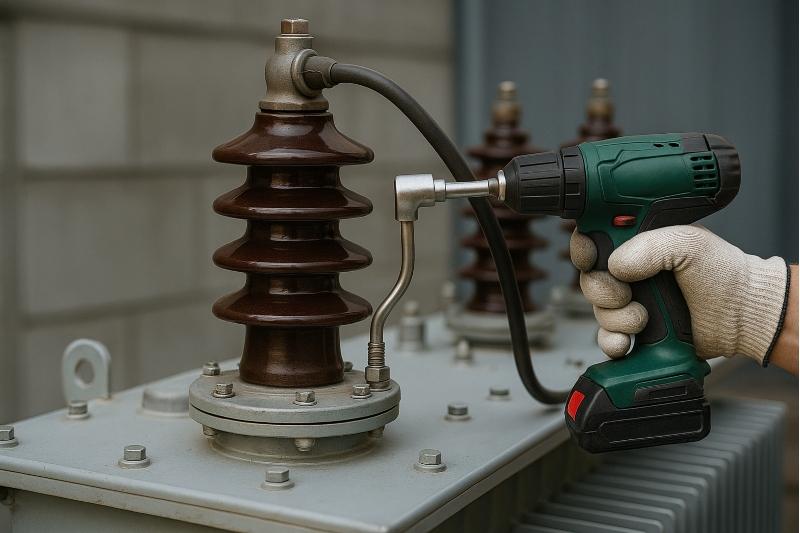
Importance of maintaining bushings in electrical transformers
The maintenance of bushings in electrical transformers is crucial to ensure the safety and efficiency of electrical systems. These components are essential for connecting transformers to transmission lines, and their proper functioning is vital to avoid electrical failures.
Bushings act as insulators, allowing the passage of electrical current without causing short circuits. Therefore, their regular maintenance is fundamental to prevent insulation issues that could lead to interruptions in the power supply.
Proper maintenance also helps extend the lifespan of transformers, reducing the need for costly repairs or replacements. This is especially important in industrial and electrical installations where service continuity is critical.
Additionally, maintaining bushings contributes to the safety of personnel working in electrical installations, minimizing the risk of accidents due to insulation failures.
- Prevention of electrical failures
- Extension of transformer lifespan
- Reduction of repair costs
- Improvement of workplace safety
Types of maintenance for bushings
There are several types of maintenance that can be applied to bushings in electrical transformers, each with its own characteristics and benefits. It is important to select the appropriate type of maintenance based on the specific needs of each installation.
Preventive maintenance is one of the most common and focuses on the regular inspection and cleaning of bushings to prevent issues before they occur. This type of maintenance may include checking connections and applying special lubricants.
On the other hand, corrective maintenance is carried out once a problem in the bushings has been detected. This type of maintenance may involve repairing or replacing damaged components to restore the proper functioning of the transformer.
Lastly, predictive maintenance uses advanced technologies to monitor the condition of bushings and predict possible failures before they occur. This allows for more efficient maintenance planning.
- Preventive maintenance
- Corrective maintenance
- Predictive maintenance
Inspection and cleaning procedures
The inspection and cleaning of bushings are fundamental steps in transformer maintenance. These procedures help identify and correct issues before they become serious failures.
During visual inspection, bushings are checked for signs of wear, cracks, or dirt accumulation. It is important to perform this inspection regularly to detect problems in time.
Cleaning of bushings is performed to remove any dirt or contaminants that may affect their performance. This can include the use of special chemical products or mechanical cleaning methods.
Additionally, it is crucial to verify that electrical connections are properly tightened to avoid contact problems that could cause electrical failures.
- Regular visual inspection
- Contaminant cleaning
- Verification of connections
Repair and replacement of bushings
If problems are detected during inspection, it may be necessary to carry out repairs or even replace the bushings. This process must be carried out carefully to ensure the safety and performance of the transformer.
Repairing bushings can include correcting cracks or replacing damaged components. It is important to use high-quality materials to ensure the durability of repairs.
In some cases, a complete replacement of bushings may be the best option, especially if the damage is extensive or if the bushings are old and do not meet current standards.
It is advisable to have trained personnel perform these tasks, as improper handling of bushings can result in additional damage or safety risks.
- Repairing cracks
- Replacement of components
- Complete replacement if necessary
Advanced technologies in bushing maintenance
The use of advanced technologies in bushing maintenance is revolutionizing how these critical components are managed. These technologies allow for more precise and efficient monitoring, improving the reliability of electrical systems.
One of the most promising technologies is online monitoring, which uses sensors to collect real-time data on the condition of bushings. This allows potential problems to be detected before they become failures.
Another important technology is data analysis, which uses advanced algorithms to interpret the collected information and predict the future behavior of bushings. This facilitates maintenance intervention planning.
Additionally, the use of drones and robots for bushing inspection is gaining popularity, as it allows for detailed inspections without the need to interrupt electrical service.
- Online monitoring
- Data analysis
- Use of drones and robots
Case studies and relevant statistics
Case studies and statistics provide valuable information on the effectiveness of different maintenance strategies for bushings. Analyzing these data can help companies make informed decisions about their maintenance practices.
A notable case study is that of an electric company that implemented a predictive maintenance program for their transformers. As a result, they managed to reduce failures by 30% and increase the lifespan of their equipment by 20%.
Statistics also show that using advanced technologies in bushing maintenance can reduce operational costs by 15% by optimizing maintenance interventions and minimizing downtime.
These examples highlight the importance of adopting innovative approaches to bushing maintenance, which can result in significant improvements in the efficiency and safety of electrical systems.
- Reduction of failures by 30%
- Increase in lifespan by 20%
- Reduction in operational costs by 15%
The maintenance of bushings in electrical transformers is a crucial aspect of ensuring the efficiency and safety of electrical systems. Through preventive, corrective, and predictive maintenance practices, it is possible to extend the lifespan of transformers and reduce the risk of failures. The incorporation of advanced technologies, such as online monitoring and data analysis, is transforming how these components are managed, allowing for more efficient planning and reduced operational costs. Case studies and statistics demonstrate that adopting innovative approaches can result in significant improvements in the reliability and safety of electrical systems.